
The Gulf Railway Project, a major infrastructure initiative connecting six Gulf Cooperation Council (GCC) member states, has gained renewed strategic importance following disruptions in the Strait of Hormuz. The 1,768-kilometre railway network is intended to strengthen regional connectivity, facilitate trade and reduce dependence on vulnerable maritime shipping routes.
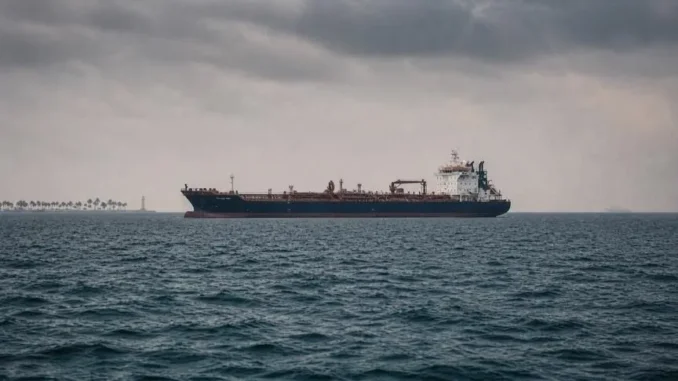
Iran’s closure of the Strait of Hormuz following US and Israeli strikes on February 28 disrupted maritime transportation and raised concerns about the security of regional supply chains. Consequently, Gulf countries have intensified efforts to develop alternative transportation and commercial routes.
Approved by the GCC Supreme Council in December 2009, the project is being supervised by the Gulf Railway Authority, established in 2021. Approximately 55.92 per cent of the network had been completed, with operations targeted to begin in December 2030. The estimated cost of its basic infrastructure ranges between $15.4 billion and $16 billion.
The railway will connect Kuwait with Saudi Arabia’s Dammam, before extending through Qatar and the United Arab Emirates to Oman’s capital, Muscat, via Sohar. A proposed bridge will also establish a direct railway connection between Saudi Arabia and Bahrain.
Saudi Arabia will accommodate the longest section, covering 672 kilometres, followed by the UAE with 461 kilometres and Oman with 330 kilometres. The remaining sections will extend across Qatar, Kuwait and Bahrain.
The network will support both passenger and freight transportation. Passenger trains equipped with European signalling technology are expected to operate at speeds of up to 200 kilometres per hour, while freight services will travel between 80 and 120 kilometres per hour.
By 2030, the railway is expected to transport approximately six million passengers and 200 million tonnes of freight annually. Its long-term targets for 2045 include more than eight million passengers and 271 million tonnes of cargo.
Kuwaiti economist Nader al-Obaid believes the initiative will reduce pressure on maritime transportation, strengthen logistical cooperation and encourage greater economic integration among Gulf countries. He also expects improved connectivity to benefit industrial production, tourism and services while attracting international businesses and facilitating technological exchange.
Furthermore, the railway could eventually provide improved access to Iraqi and Iranian markets if regional stability returns. Such connectivity may strengthen food security, expand commercial opportunities and support economic diversification across the Gulf.
However, energy and economics specialist Nihad Ismail identified regional political tensions as a significant obstacle to completing the project. He argued that the continuing confrontation involving the United States, Israel and Iran could complicate implementation. Tehran may also interpret alternative transport corridors as an attempt to diminish its strategic influence over the Strait of Hormuz.
Ismail therefore encouraged Gulf governments to pursue diplomatic engagement with Iran, strengthen regional reconciliation and explore opportunities for including Tehran in broader infrastructure cooperation.
Despite financial, technical and geopolitical challenges, the Gulf Railway Project represents a significant effort to diversify transportation networks, strengthen economic integration and improve the region’s resilience against future trade disruptions.
NEWS DESK
PRESS UPDATE