
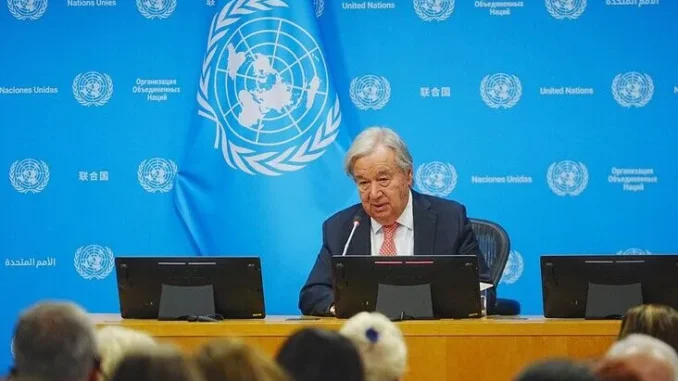
UN Secretary-General Antonio Guterres on Friday called for stronger international efforts to address growing inequalities, warning that developing countries are facing rising debt, climate-related challenges and technological disadvantages that could undermine sustainable development.
Speaking to foreign ministers from the G77 and China in New York, Guterres said the coalition’s efforts to create a fairer global system remain important as conflicts, economic difficulties and climate change continue to affect development.
He said progress toward the Sustainable Development Goals has slowed and emphasized the need to continue efforts to address inequalities within the international system.
According to Guterres, developing countries need an additional $4 trillion each year to achieve the objectives outlined in the 2030 Agenda for Sustainable Development.
He called for reforms to the global financial system that would give developing nations a greater role in decision-making while increasing financing through multilateral development banks.
Guterres also highlighted the growing debt burden facing developing countries and urged the international community to provide more affordable financing and encourage investment in areas with the greatest needs.
Climate change was another major concern raised by the UN chief. He said extreme heat, floods, droughts, storms and rising sea levels are placing significant pressure on developing economies, threatening livelihoods and potentially reversing development progress.
He called for increased funding for climate adaptation and additional support for countries dealing with climate-related losses and damage.
Guterres also stressed that the transition toward clean energy should help narrow global inequalities rather than create new economic gaps between countries.
Addressing the rapid development of artificial intelligence, he said developing nations should have a meaningful role in establishing international rules and gaining access to emerging technologies.
Guterres argued that AI should provide benefits to countries regardless of their financial capacity, rather than primarily benefiting nations with greater resources.
He concluded by emphasizing that justice should remain central to international efforts on finance, climate change, technology and global governance while countries work to protect development gains and promote peace.
PRESS UPDATE