
The Permanent Court of Arbitration in The Hague has ruled that India remains obligated to comply with the 1960 Indus Waters Treaty with Pakistan, rejecting New Delhi’s position that the agreement could be placed on hold.
The court also issued interim measures concerning India’s Ratle hydroelectric project in the disputed Kashmir region. It ordered India to temporarily stop concreting parts of the dam wall and power intake structure above specified levels until 90 days after a neutral expert delivers a final decision on the project’s compliance with the treaty.
Pakistan had asked the arbitration court to examine the design of several components of India’s run-of-river hydroelectric projects on the western rivers covered by the treaty. The PCA unanimously concluded that none of the reasons presented by India justified suspending or terminating the agreement.
The ruling follows India’s decision in April 2025 to place the World Bank-brokered treaty in abeyance after the Pahalgam attack in Indian-administered Kashmir, which killed 26 people. India blamed Pakistan for the attack, while Islamabad rejected the allegation.
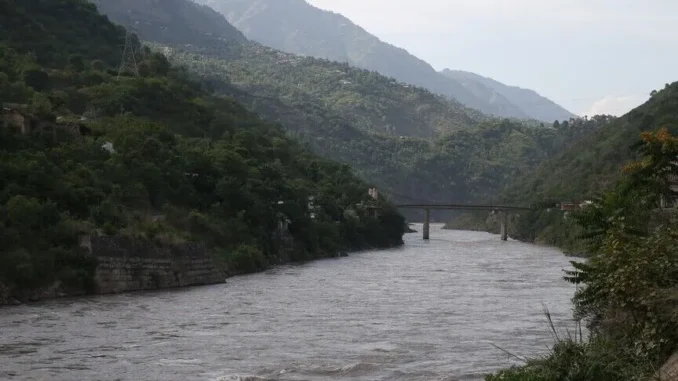
UN-backed and internationally mediated provisions of the treaty divide the Indus Basin’s six major rivers between the two countries. India has rights over the eastern rivers — Sutlej, Beas and Ravi — while Pakistan has primary rights over the western rivers — Indus, Jhelum and Chenab.
Pakistan’s Foreign Minister Ishaq Dar welcomed the ruling, saying it supported Islamabad’s longstanding position that an international treaty cannot be unilaterally suspended. He called on India to fulfil its treaty obligations and respect international dispute-settlement decisions.
India, however, rejected the court’s position and maintained that its decision to keep the treaty in abeyance remains valid. Its Foreign Ministry argued that the arbitration court had no authority over India’s sovereign decisions and said the ruling would not affect its activities related to the hydroelectric projects.
The dispute has further strained relations between the two nuclear-armed neighbours, who engaged in several days of cross-border military clashes in May 2025 before a ceasefire was reached. Pakistan has repeatedly warned that restrictions on its water supplies would seriously threaten its agriculture, which depends heavily on the western rivers.
NEWS DESK
PRESS UPDATE