
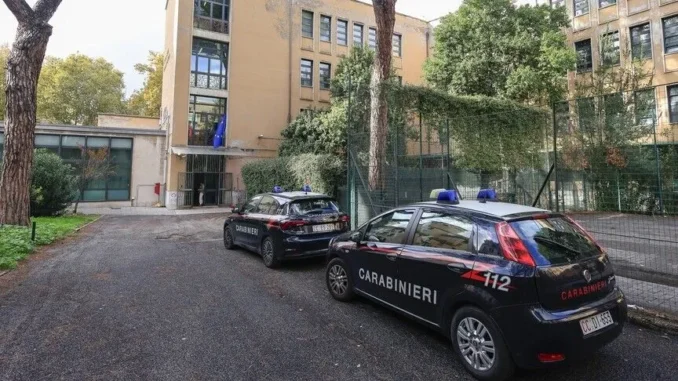
Hundreds of schools across Italy received another series of bomb threats through emails on Monday. However, authorities did not order evacuations under newly introduced Interior Ministry guidelines designed to prevent unnecessary disruption caused by false alarms, local media reported.
According to Italian broadcaster Sky TG24, the threatening message was signed with the initials “MA” and attributed to an individual identified as Mikhail Andropov. The email warned that an explosive device had allegedly been placed inside a school building and would detonate within 40 minutes.
The threatening communication reportedly reached hundreds of educational institutions nationwide.
Local prefects will evaluate the potential security risks, while police and the Postal Police have launched investigations into the incident.
Preliminary findings indicated that the sender’s email address was associated with a university research centre in Da Nang, Vietnam. Investigators are examining whether the account was compromised by hackers or whether a virtual private network (VPN) was used to hide the sender’s actual IP address.
New Measures to Prevent School Disruptions
The latest incident follows similar threatening emails sent to thousands of Italian schools over the previous few days. Earlier warnings resulted in the evacuation of students and teachers, although subsequent investigations established that the threats were false alarms.
Following these incidents, Italy’s Interior Ministry introduced new operational guidelines directing prefects and school administrators not to evacuate educational buildings automatically whenever repeated threatening emails are received without concrete evidence of danger.
Instead, authorities are instructed to forward such reports to law enforcement agencies for technical investigations and security inspections. This approach allows educational activities to continue whenever officials find no immediate threat.
Deputy Prime Minister and Foreign Minister Antonio Tajani described Monday’s incident as another unsuccessful effort to interrupt school activities.
Speaking on the sidelines of the EU Foreign Affairs Council, Tajani said that Italy had successfully prevented the latest spam-based threat from forcing schools to close. Although the warning was considered clearly false, he argued that its intention was to create confusion and disrupt normal activities.
He also emphasised the importance of stronger international cooperation to address hybrid security threats, particularly cyberattacks and hacking incidents.
NEWS DESK
PRESS UPDATE