
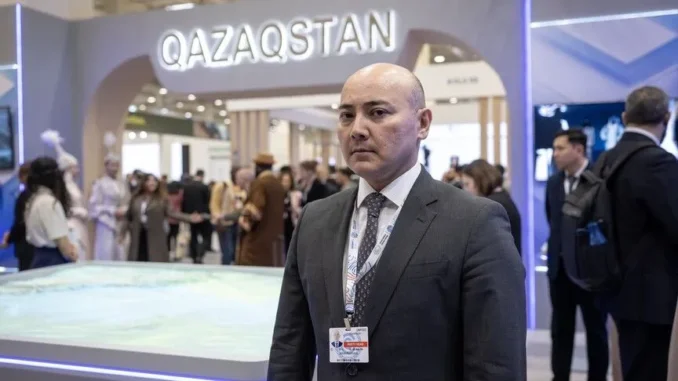
Kazakhstan Seeks Stronger Environmental Partnership with Türkiye
ANTALYA, Türkiye – Kazakhstan is looking to expand its environmental and climate cooperation with Türkiye, particularly in renewable energy, energy efficiency, waste management and carbon trading, Ecology and Natural Resources Minister Alibek Kuantyrov said during the COP31 UN climate conference in Antalya.
In an interview with Anadolu, Kuantyrov highlighted the strong strategic relationship between the two countries, noting that Türkiye’s progress in green technology and environmental protection could provide valuable experience for Kazakhstan.
He said Kazakhstan was particularly interested in Türkiye’s achievements in renewable energy development, energy-efficient buildings and solid waste management. He also stressed that both countries could benefit from sharing knowledge and expertise.
Meanwhile, Kazakhstan is prepared to contribute its experience in biodiversity protection and financial mechanisms that support environmental investments. The minister identified carbon markets and emissions trading systems as potential areas for joint initiatives.
Kuantyrov described relations between Kazakhstan and Türkiye as a comprehensive strategic partnership covering economic, political, energy and environmental matters. He also welcomed Türkiye’s role in hosting COP31, saying the conference offered an opportunity to turn previous climate commitments into practical action.
He noted that discussions at the summit were increasingly focused on implementing effective environmental technologies and reducing the negative impact of industrial activities.
Kazakhstan Appreciates Türkiye’s Zero Waste Programme
The Kazakh minister also praised Türkiye’s Zero Waste initiative, introduced in 2017 under the leadership of First Lady Emine Erdogan. The programme focuses on reducing waste, encouraging recycling and promoting the responsible use of natural resources.
Kuantyrov expressed gratitude to Emine Erdogan for launching the initiative, saying it had significantly improved public awareness about recycling and sustainable waste management, especially among younger people.
He also recalled her visit to Astana in May, when she inaugurated a scientific and practical waste management laboratory at an agricultural university. According to the minister, her efforts have helped Kazakhstan improve its own waste management practices.
Kazakhstan Outlines Environmental Protection Goals
Discussing his country’s environmental priorities, Kuantyrov said Kazakhstan’s pavilion at COP31 presented its updated climate commitments, carbon neutrality objectives and initiatives aimed at lowering industrial emissions.
The exhibition also showcased environmentally friendly technologies and emission-reduction projects involving major oil, gas and metallurgy companies.
He explained that environmental protection could create fresh opportunities for economic development, although balancing industrial growth with ecological sustainability remained a major challenge for countries worldwide.
The minister further highlighted Kazakhstan’s biodiversity conservation programmes, including a long-term initiative to bring tigers back to the southern region near Lake Balkhash. Tigers disappeared from the area more than seven decades ago, and the initial phase of the restoration programme is expected to continue for at least 35 years.
He also pointed to the successful recovery of the saiga antelope population, which increased from around 21,000 in 2003 to approximately 4.7 million following government conservation efforts.
Kuantyrov said Kazakhstan was willing to share its wildlife restoration experience with Türkiye and support similar biodiversity projects. He expressed confidence that both countries could work together to protect endangered species and strengthen environmental sustainability.
NEWS DESK
PRESS UPDATE