
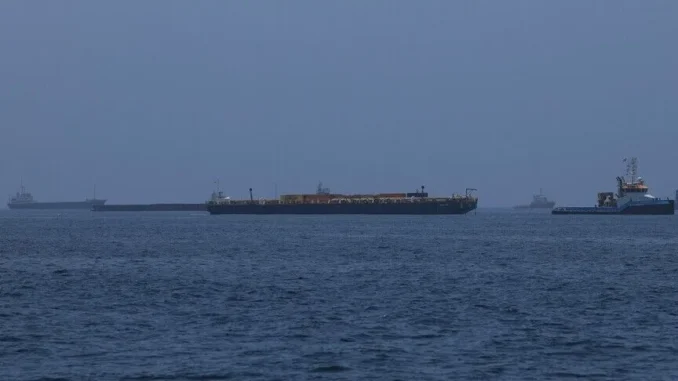
ISTANBUL: Commercial shipping through the Strait of Hormuz has dropped to its lowest level since May, with only three commodity vessels completing the passage over the past 24 hours as renewed military tensions between the United States and Iran continue to disrupt one of the world’s busiest energy routes.
Maritime tracking data showed that most vessels either delayed entering the strategic waterway or turned back after recent Iranian attacks on commercial shipping and the US decision to reimpose a blockade on vessels traveling to or from Iranian ports.
The only commodity ships to transit the strait on Thursday were the Miraan fuel tanker, the Norita liquefied petroleum gas carrier and the Maha Yaya bulk carrier. Both the Miraan and Norita later halted in the Gulf of Oman after leaving the strait through the Iranian shipping lane, where the renewed US maritime blockade is being enforced.
A fourth vessel, the bunkering tanker Arolia, crossed the strait early Friday carrying Iraqi fuel oil but later reversed course and returned to the Gulf, highlighting growing concerns among shipping operators over security risks.
The sharp decline in maritime traffic follows the collapse of a US-Iran ceasefire and shipping arrangement reached in June, after both countries resumed military operations around the critical waterway.
The United States has intensified military operations by targeting Iranian coastal and naval infrastructure following the reinstatement of its blockade. According to US Central Command, American forces struck multiple sites across Bushehr, Chabahar, Jask, Konarak, Abu Musa and Bandar Abbas, targeting missile positions, drone facilities, coastal defense systems and maritime assets.
The latest escalation also follows Iranian missile attacks on the UAE-flagged tankers Mombasa and Al Bahiyah in Omani waters near the southern entrance to the Strait of Hormuz. The strikes reportedly killed one Indian crew member and injured eight others.
The International Maritime Organization has recorded 56 shipping-related incidents connected to the regional conflict, resulting in 17 seafarer deaths as of this week.
The Strait of Hormuz remains one of the world’s most strategically important maritime corridors, handling a significant share of global crude oil, petroleum products and liquefied natural gas exports from Gulf producers to international markets.
NEWS DESK
PRESS UPDATE