
Canadian and US officials are expected to hold another round of discussions Tuesday as Ottawa attempts to prevent new American tariffs on roughly $30 billion worth of Canadian exports from coming into force after midnight.
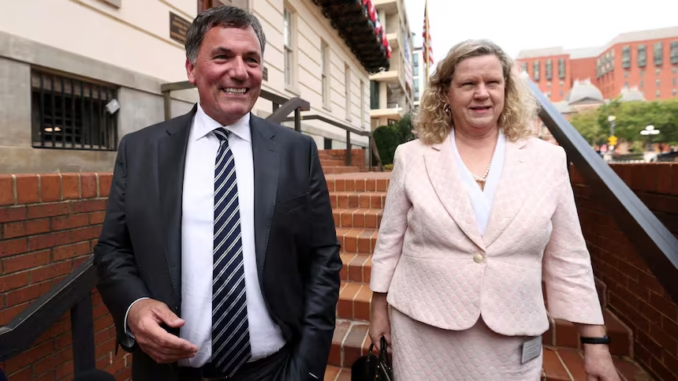
Canadian Trade Minister Dominic LeBlanc and the country’s chief trade negotiator with Washington, Janice Charette, are leading efforts to reach an agreement. Sources told Radio-Canada that LeBlanc could meet with US Trade Representative Jamieson Greer, followed by a possible conversation between Prime Minister Mark Carney and US President Donald Trump. However, no exact meeting times had been confirmed by Tuesday afternoon, and negotiations remained uncertain.
The Trump administration has threatened to impose tariffs of up to 50 percent on a broad range of Canadian products, describing the measures as retaliation for Canadian tariffs on certain US imports. Ottawa introduced those countermeasures after Washington began its trade offensive against Canada last year.
If the two sides fail to reach an agreement, the new duties will begin Wednesday, potentially increasing costs for Canadian industries including liquor, hockey equipment, lumber and paper.
The negotiations are focused on determining what concessions Canada can secure from Washington in return for changes to its own trade policies. LeBlanc is seeking the removal of the proposed Section 338 tariffs and reductions in existing Section 232 duties affecting products such as steel, aluminum, automobiles and lumber.
The United States, meanwhile, wants American liquor products restored to Canadian government-controlled stores and is seeking the removal of Canada’s retaliatory tariffs on US automobiles. Washington is also requesting changes to the way Canada manages dairy quotas under its supply-management system.
US Trade Representative Jamieson Greer has indicated that Washington is unlikely to completely abandon its tariff strategy, although the overall rates could potentially be reduced if Canada agrees to key American demands.
Industry representatives say significant disagreements remain, particularly in sectors such as automobiles and steel. Canada is seeking the lowest possible tariff rates, while Ottawa considers the current US proposals inadequate.
In the automotive sector, the latest US proposal would reportedly reduce tariffs on Canadian-built vehicles from 25 percent to a headline rate of 15 percent, although Canadian officials continue to seek more favorable terms.
NEWS DESK
PRESS UPDATE