
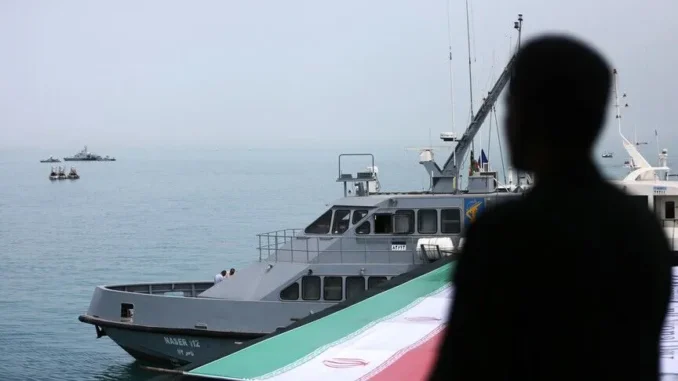
ISTANBUL, October 13, 2026 — A senior commander of Iran’s Islamic Revolutionary Guard Corps (IRGC) Navy warned Tuesday that Iranian forces would sink US warships if they approached the entrance to the Strait of Hormuz, according to Iran’s state news agency IRNA.
Rear Admiral Ali Azmaei said Iranian forces were waiting for American warships to enter the area, claiming they were prepared to confront them. He also suggested that US naval vessels were keeping their distance because of their vulnerability.
Azmaei claimed that a US aircraft carrier valued at approximately $13 billion had moved about 700 kilometres (435 miles) away from the strategic waterway. He challenged Washington to enter the area if it wanted to determine who controlled passage through the strait.
The Iranian commander also said his forces had disclosed details of two incidents involving vessels accused of violating maritime rules. He alleged that the United States and its regional partners had prevented information about those incidents from reaching the public.
According to Azmaei, the IRGC Navy oversees the Strait of Hormuz and the Persian Gulf, while Iran’s conventional navy operates in the Gulf of Oman. He described the IRGC’s approach to maritime traffic as “smart control,” saying vessels travelling to and from Iran must obtain permission to use Iranian waterways.
Azmaei further claimed that Iranian forces were now better prepared for confrontation than they had been at the start of the war.
Tensions in and around the Strait of Hormuz remain elevated amid the ongoing conflict between Iran and the United States and disagreements over maritime access. Tehran maintains that it has authority over navigation through Iranian waters and has warned ships against using routes it considers unauthorized. Washington, meanwhile, continues to insist on freedom of navigation.
Recent attacks targeting commercial vessels in and around the strait have added to concerns over maritime security in the strategically important region.
NEWS DESK
PRESS UPDATE