
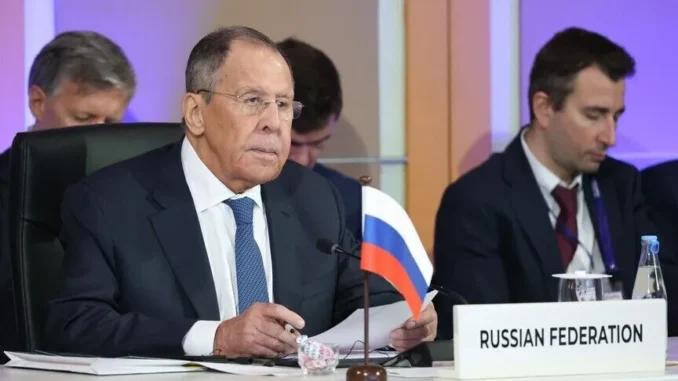
Lavrov Warns of Russian Response to EU Vessel Seizures
Russian Foreign Minister Sergey Lavrov has accused the European Union of engaging in “robbery” and “piracy” through measures targeting vessels transporting Russian energy shipments, warning that Moscow will respond to any seizure of Russian commercial ships.
Speaking to Russian state television, Lavrov criticized the EU’s use of the term “shadow fleet” for vessels accused of circumventing restrictions on Russian energy exports. He argued that the designation was created by the EU and does not appear in international legal documents.
Lavrov said the bloc was attempting to limit Russia’s ability to generate revenue from international markets while treating its own decisions as more important than international law.
According to the Russian foreign minister, EU member states have been given authority to stop and inspect certain vessels and, in some circumstances, seize and sell their cargoes, with proceeds potentially directed to Ukraine.
He said Russian President Vladimir Putin had made clear that Moscow would respond to such actions. Lavrov warned that Russia would determine its own targets and could respond against vessels operating on behalf of countries that make such measures part of their official policy.
Lavrov also criticized Japan’s current approach to relations with Moscow, contrasting it with the policies of former Prime Minister Shinzo Abe, whom he said recognized the importance of cooperation with Russia for Japan’s national interests.
He accused Abe’s successors of moving closer to the United States and pursuing greater militarization.
Lavrov further questioned Japanese Foreign Minister Toshimitsu Motegi’s description of a brief encounter between the two officials at an ASEAN gathering in the Philippines as a discussion of bilateral and regional issues. He recalled that Motegi approached him during an official dinner, exchanged greetings and then returned to his seat.
Lavrov also claimed that Japanese business representatives had recently visited Russia but were instructed by Tokyo not to discuss new projects with Russian counterparts.
NEWS DESK
PRESS UPDATE