
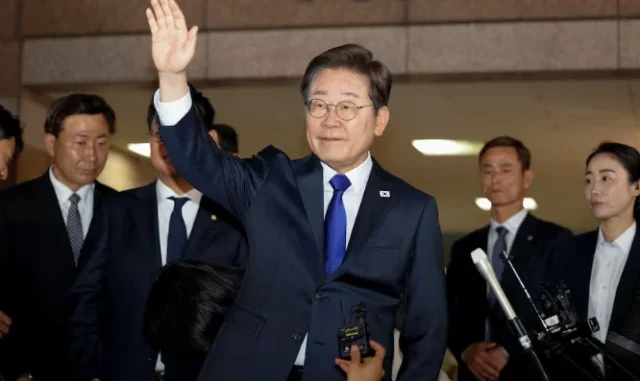
Lee Jae-myung Elected South Korea’s Fourteenth President Amid Record Turnout
South Korean voters elected Democratic Party candidate Lee Jae-myung as president on June 3, 2025, following a snap election prompted by the constitutional crisis triggered when his predecessor, Yoon Suk-yeol, attempted to impose martial law last December. Lee, a 61-year-old human rights lawyer-turned-politician, secured 49.42% of the vote, defeating People Power Party nominee Kim Moon-soo. With a 79.4% turnout—the highest in 28 years—Lee’s victory reflects strong public engagement in a contest shaped by legal challenges and intense political debate.
Compromise Talks and Constitutional Crisis
The December 3, 2024, attempt to declare martial law sparked immediate backlash. South Korea’s Constitutional Court swiftly nullified the measure and removed President Yoon from office, paving the way for a new election. Lee had emerged as a leading opponent of the brief martial law order, positioning himself as a defender of democratic norms and the rule of law.
Overcoming Legal Obstacles
Lee’s path to the presidency was complicated by allegations of corruption, abuse of power, and making false statements—charges that carried the risk of ending his campaign prematurely. Earlier this year, an appellate court acquitted him of falsifying statements during the 2022 campaign, clearing his candidacy. However, in late May 2025, the Supreme Court overturned that acquittal and ordered a retrial. Despite these ongoing legal battles, Lee continued to campaign vigorously.
Early Life and Career
Born in 1963 in a rural village in North Gyeongsang Province, Lee worked in a factory in Seongnam from childhood to help support his family. At age 13, he suffered a permanent arm injury when his wrist was crushed by a press machine. Determined to pursue education, he passed the high-school entrance exam in 1978 and entered Chung-Ang University on a full scholarship in 1980, earning a law degree and passing the national bar exam in 1986.
Following graduation, Lee spent nearly two decades as a human rights attorney. In 2005, he entered politics with the Uri Party, a predecessor of the modern Democratic Party. He was elected mayor of Seongnam in 2010 and re-elected in 2014, then served as governor of Gyeonggi Province from 2018 to 2021. After an unsuccessful bid for the presidency in 2022, he won a National Assembly seat representing Incheon in June 2022.
Assassination Attempt and Public Image
During the January 2025 presidential campaign, Lee survived an assassination attempt when a knife struck his neck at a public rally. Authorities arrested the assailant, who claimed the attack aimed to prevent Lee’s election. The incident generated widespread sympathy and underscored concerns about political violence.
His personal story of overcoming poverty and industrial injury resonates with middle- and working-class voters. While members of South Korea’s elite have sometimes mocked his humble origins, his reputation as a “people’s politician” has strengthened his appeal among citizens who prioritize social mobility and economic fairness.
Party Majority and Legislative Support
Lee’s Democratic Party also holds a parliamentary majority, marking the first time in years that the presidency and legislature are aligned. The party controls more than 150 of the 300 seats in the National Assembly, granting Lee greater capacity to enact policy without frequent opposition vetoes. This combined authority may accelerate legislative action on issues such as housing affordability, labor rights, and economic inequality.
Looking Ahead
Official election results are expected to be confirmed on June 4, 2025. As Lee prepares to take office, he faces pressing challenges: resolving diplomatic tensions with North Korea, managing relations with key partners like the United States and China, and steering domestic economic recovery amid global uncertainties. Observers note that his legal troubles could resurface if the retrial finds him guilty of making false statements, potentially undermining his political standing.
Nevertheless, Lee’s victory represents a symbolic shift in South Korean politics. A former factory worker who rose to the highest office, he embodies a narrative of resilience and social justice that may define his presidency.
NEWS DESK
PRESS UPDATE