
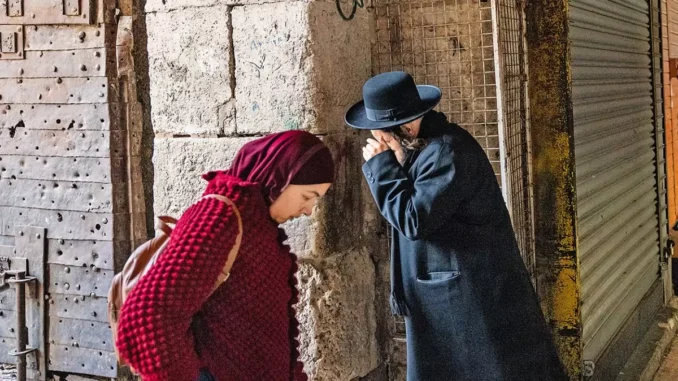
Eid al-Adha, also known as The Feast of the Sacrifice, is a significant Muslim holiday that marks the culmination of the Hajj pilgrimage to Mecca. Celebrated starting from the tenth day of Dhu-al-Hijja, the last month of the Islamic calendar, it spans four days. The holiday commemorates the story of the “Sacrifice of Ishmael,” akin to the biblical narrative of Isaac’s sacrifice. Muslims who observe this holiday often sacrifice a lamb and share the meat during festive meals or donate it to those in need.
Key statistics about the Muslim population in Israel for the end of 2023 include:
The Muslim population reached approximately 1.782 million, making up 18.1% of Israel’s total population. This represents an increase of 35,000 people from the previous year.
The annual growth rate for the Muslim community was 2.0% in 2023, slightly down from 2.2% in 2022.
Jerusalem is home to the largest Muslim community in Israel, with around 380,000 residents. This group constitutes 21.3% of all Muslims in the country and 38.1% of the city’s population.
The Muslim demographic is notably youthful, with 31.9% of individuals aged 0-14, while only 4.9% are aged 65 and older.
Among Muslims aged 45-49, the percentage of never-married women is 10.5%, compared to 5.4% for men in the same age group.
Fertility trends among the Muslim population show a decrease over the years. By 2022, the fertility rate was 2.91 children per woman. For comparison, Jewish women had a fertility rate of 3.03, Druze women 1.85, Christian women 1.68, and women not classified by religion 1.26.
Households headed by Muslims tend to be larger, with 26% having six or more members, in contrast to 9% of Jewish households.
Life expectancy for Muslim men in 2022 was 77.0 years and 81.8 years for women.
In the 2022/23 school year, there were 399,282 Muslim students in primary and secondary education, with 6,778 attending Hebrew education institutions and the rest in Arab education.
For the 2021/22 academic year, 74.9% of students in Arab education qualified for matriculation certificates, and 46.8% met university entry requirements.
A significant 41.9% of Muslim women pursued higher education within eight years of finishing high school, compared to 19.3% of Muslim men.
In 2022/23, 3,400 Muslims participated in pre-academic preparatory programs, accounting for 26.2% of all students in such courses in Israel. These students typically opted for academic college preparatory courses over university ones and were younger, with less-educated parents and a higher percentage of female students.
During the 2022/23 academic year, 11,400 Muslims earned academic degrees from Israeli institutions, making up 13.0% of all degree recipients in the country.
Labor force participation among Muslims aged 15 and over was 48.8% in 2023, with 63.7% participation among men and 34.0% among women.
Additional insights:
In 2022, the Persons with Disabilities Register included about 204,700 Arabs, with approximately 165,500 Muslims.
Between 2020 and 2021, there was a notable increase of 20.6% in the number of Muslims judged in trials, compared to an 11.9% increase among non-Muslims.
In 2021, the conviction rate for criminal trials among Muslims was 2.7 times higher than that of non-Muslims (565 versus 210 per 100,000 individuals).
The most common offenses included public order violations (26.3%), crimes against persons (21.6%), and property crimes (18.6%).
In 2023, there were 841,545 licensed Muslim drivers, comprising 16.5% of all drivers in Israel, with women making up 41.1% of this group.
In 2023, 3,800 Muslims were injured in road accidents, representing 23.9% of all traffic-related casualties. This included 90 fatalities, 647 severe injuries, and 3,063 minor injuries.–Facts by Central Bureau of Statistics of Israel