
Israel Prevents Arab Foreign Ministers’ Ramallah Meeting Amid Settlement Tensions
JERUSALEM:
A high-level diplomatic visit to Ramallah by Arab foreign ministers was abruptly postponed on Saturday after Israel refused to grant entry permits, sparking fresh diplomatic tensions ahead of a major international summit on Palestinian statehood.
The planned meeting, which was to include senior diplomats from Jordan, Egypt, Saudi Arabia, and Bahrain, was scheduled to take place in the Palestinian Authority’s administrative capital in the occupied West Bank. However, Israel blocked the delegation’s entry, citing concerns over the nature of the meeting.
According to Jordan’s foreign ministry, Israel’s obstruction represents a “clear violation of its responsibilities as an occupying force.” The foreign ministers required Israeli approval to cross into the West Bank from Jordan — approval that was ultimately denied.
An Israeli official defended the move, labeling the planned gathering in Ramallah as a “provocative meeting” aimed at advocating for the recognition of a Palestinian state — a move Israel opposes, calling it a potential “terrorist state in the heart of Israel.”
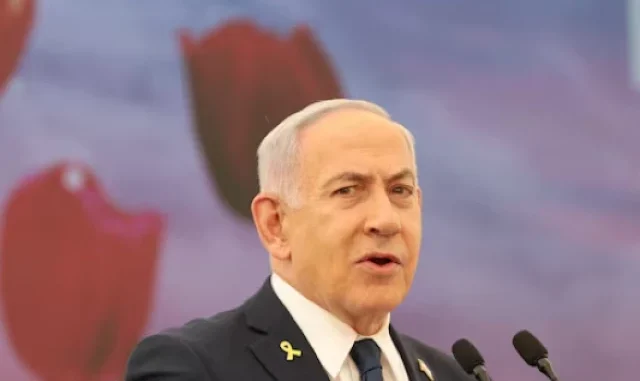
The decision comes shortly after Prime Minister Benjamin Netanyahu’s government approved one of the largest expansions of Israeli settlements in the West Bank in recent years, drawing condemnation from the international community.
The Ramallah visit was intended to precede an international conference on Palestinian statehood, scheduled for June 17–20 in New York, co-chaired by France and Saudi Arabia. The event is expected to explore pathways toward a two-state solution — a prospect Israel has firmly rejected.
France’s President Emmanuel Macron has called the recognition of a Palestinian state both a “moral duty” and a political necessity. But Israeli leaders have doubled down, with Defence Minister Israel Katz calling the recent settlement expansion an “historic moment” and a “clear message to Macron” that Israel remains steadfast in its opposition.
Israel captured the West Bank during the 1967 Middle East war, and while Palestinians view the territory as central to a future independent state — along with Gaza and East Jerusalem — it is now increasingly fragmented due to Israeli settlements and military checkpoints. Most of the international community considers these settlements illegal under international law.
As diplomatic efforts intensify in the run-up to the New York summit, the postponement of the Ramallah meeting underscores deepening rifts over the future of Palestinian statehood and the path to peace in the region.