
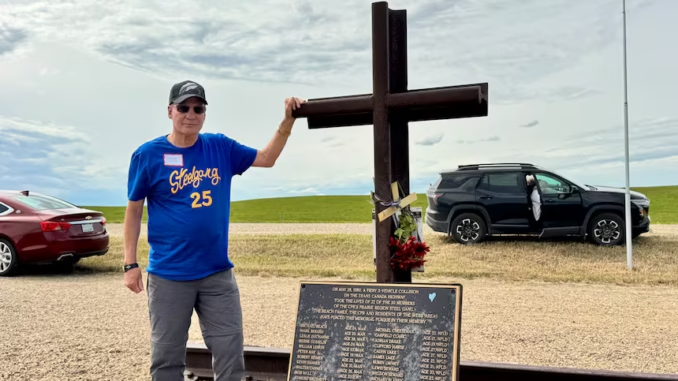
A survivor of Saskatchewan’s deadliest highway disaster has revisited the site of a tragic 1980 bus crash that claimed the lives of 22 young railway workers and left lasting emotional scars on those who lived through it.
Derald Flamand, now 64, was among eight survivors of the fiery collision that occurred on May 28, 1980, west of Swift Current, Saskatchewan. The crash involved a school bus carrying Canadian Pacific Railway workers, a wrong-way car, and a tanker truck transporting hot asphalt oil. The impact triggered a devastating fire that made rescue efforts extremely difficult.
Flamand recalls the moment just before impact, remembering the bus driver warning passengers about an oncoming vehicle. He later regained consciousness in hospital with severe injuries, including fractures to his back and neck, and soon learned that most of his colleagues had died in the incident.
Of the 22 victims, many were young workers from across Canada, including Newfoundland and Labrador, Manitoba, and Ontario. The scale of loss turned the event into one of the most devastating highway tragedies in Saskatchewan’s history.
Flamand described the emotional aftermath as overwhelming, saying he struggled with trauma for decades without receiving counselling or psychological support. He admitted turning to alcohol as a coping mechanism, saying he “drank his sorrows away” in the years following the crash.
Decades later, he joined families of victims, first responders, and former colleagues at a memorial site near Webb, 34 kilometres west of Swift Current, where a new plaque was installed to honour those who lost their lives.
The gathering highlighted not only the scale of the tragedy but also the long-term psychological impact on survivors and communities connected to the crash. Many attendees reflected on how the lack of mental health support in the aftermath left lasting emotional wounds.
For Flamand, the memorial served as both remembrance and reflection, marking a moment of recognition for lives lost and the enduring pain carried by those who survived.
NEWS DESK
PRESS UPDATE