
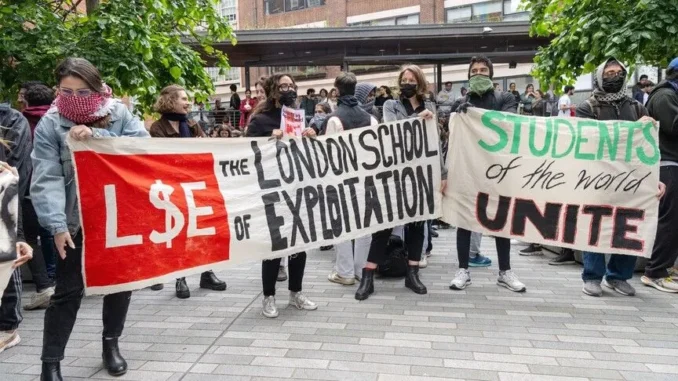
Amnesty Report Accuses UK Universities of Restricting Pro Palestine Activism
Several universities across the United Kingdom have restricted pro-Palestinian solidarity activities, with students and academics facing suspensions, disciplinary measures and campus bans, according to a new report released by Amnesty International UK on Tuesday.
Titled Silencing Dissent: UK Universities’ Response to Palestine Solidarity on Campus, the report alleges that students and university staff at several prominent institutions have faced penalties and threats to their immigration status for activities such as chanting, applauding and wearing keffiyehs.
According to the organization, these measures have been used to limit expressions of support for Palestinians, including speech that universities may interpret as criticism of Israel.
The report also concluded that restrictions documented in its case studies frequently failed to meet the strict legal standards established under UK and international law for limiting political expression and peaceful assembly.
Covering incidents between October 7, 2023, and September 30, 2025, the report accompanies the student-led Defend Dissent campaign, which encourages universities across the country to adopt and implement the Defend Dissent Charter.
Amnesty highlighted that Muslim students and individuals displaying Palestinian cultural symbols had been disproportionately affected by the restrictions.
The report documented cases in which universities imposed disciplinary measures before completing formal hearings. It argued that precautionary actions consequently became punitive, discouraging students and academics from expressing their views.
Researchers also identified instances in which peaceful demonstrations were treated as trespassing, including protests in campus squares, entrance halls and student union buildings that had hosted demonstrations for many years.
Amnesty Warns of Wider Restrictions on Freedom of Expression
Kerry Moscogiuri, chief executive of Amnesty International UK, criticized the reported restrictions, arguing that universities should protect freedom of expression and the right to peaceful protest rather than suppress them.
She said students and academics were expressing concern about the suffering of Palestinians in Gaza, but some leading institutions had responded with punitive measures, including court injunctions and severe disciplinary action.
Moscogiuri described the situation as part of a broader effort to restrict communities seeking to raise their voices on the war in Gaza and other issues of public concern.
The report highlighted the case of Usama Ghanem, a 22-year-old student at King’s College London who was suspended in 2025 over his involvement in pro-Palestinian activism. During the suspension, he was reportedly instructed to return to Egypt.
Ghanem said he had faced indefinite suspension, monitoring and threats of deportation because of his participation in protests calling for action over the situation in Gaza.
His suspension was overturned following a review in September 2026.
The report also detailed cases involving students and academics at other prominent institutions, including the universities of Cambridge and Oxford and the London School of Economics and Political Science (LSE), who reportedly experienced pressure over their activism on campus.
NEWS DESK
PRESS UPDATE