
Canada Looks to Private Investment as It Pursues Major Nuclear Energy Expansion
The Canadian government is exploring new ways to finance an ambitious expansion of the country’s nuclear energy sector, with private institutional investors—including pension funds—expected to play a significant role in funding future reactor projects.
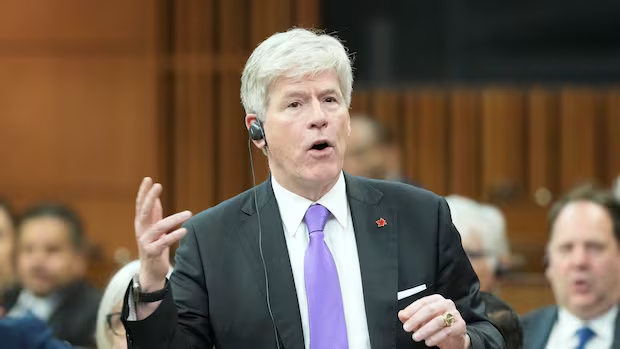
Natural Resources Minister Tim Hodgson recently outlined Ottawa’s vision to build up to 10 new nuclear reactors as part of a broader strategy to strengthen Canada’s clean energy capacity and meet growing electricity demand. To support the massive capital requirements, the government is looking to international financing models that combine public backing with substantial private investment.
One example attracting attention is the Sizewell C nuclear project in the United Kingdom. The multi-billion-dollar development relies on private investors to finance a majority of construction costs, with investment partners collectively holding a 55 per cent stake. Among those investors is La Caisse, Quebec’s public pension fund, which has committed approximately C$3.2 billion for a 20 per cent ownership interest in the project.
Canadian officials see similar partnerships as a potential pathway for financing domestic nuclear infrastructure, reducing pressure on public finances while attracting long-term institutional capital.
However, convincing pension funds to invest in large-scale nuclear projects presents a significant challenge. Pension managers typically prioritize stable, predictable returns, while nuclear developments are widely known for lengthy construction timelines, escalating budgets and complex regulatory requirements.
Recent international projects illustrate these financial risks. The Hinkley Point C nuclear station in the United Kingdom has experienced substantial cost increases since construction began, with projected expenses rising far beyond original estimates. Similarly, Finland’s Olkiluoto 3 reactor encountered years of delays and significant budget overruns before entering commercial operation.
Despite these concerns, supporters argue that nuclear power remains a reliable source of low-carbon electricity capable of supporting Canada’s long-term climate goals, industrial growth and energy security. They contend that well-structured financing models, government guarantees and improved project management could help attract institutional investors while limiting financial risks.
NEWS DESK
PRESS UPDATE