
Canada’s Top Court to Review Quebec Secularism Law Amid Concerns from Muslim Women
Background of the Law
Since 2019, the province of Quebec has enforced a controversial secularism policy, widely known as Bill 21. The law restricts certain public-sector employees—including teachers, judges, and police officers—from wearing visible religious symbols while on duty.
Now, the case has reached the Supreme Court of Canada, which is set to hear arguments over four days in Ottawa. The court will determine whether the law aligns with constitutional rights.
Personal Impact on Muslim Women
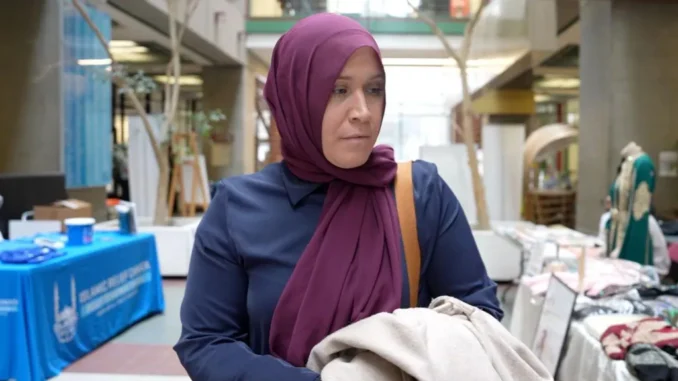
For many Muslim women, the law has created deep uncertainty about their future. Lisa Robicheau, a support worker in Montreal, says she feels increasingly excluded in her own community.
Although her current role allows her to wear a hijab, she worries about long-term job security. As a result, she has returned to university to explore alternative career options. At the same time, she has even considered leaving the province.
“I have lived here most of my life, yet I do not feel at home,” she explained, highlighting a sense of isolation.
Broader Social Effects
Researchers report that the law has had widespread consequences. According to findings shared by an academic at York University, a majority of Muslim women surveyed said the policy has limited their job opportunities.
In addition, many respondents reported experiencing discrimination or prejudice in the workplace. Some women have chosen to work within their own communities, such as in private schools or Muslim-owned businesses. Experts warn that this trend could increase social separation rather than integration.
Legal Challenge and Opposition
Several organizations have challenged the law in court. These include the Canadian Civil Liberties Association, the National Council of Canadian Muslims, and the World Sikh Organization of Canada. The English Montreal School Board has also joined the case.
Critics argue that the law unfairly targets religious minorities, especially Muslim women, who make up a significant portion of the affected population.
Government’s Position
However, Quebec’s government continues to defend the policy. Provincial leaders, including Premier François Legault, argue that the law promotes neutrality and supports peaceful coexistence. They emphasize that the policy applies equally to all religions and aims to strengthen shared public values.
Voices from Other Communities
The law has also affected other religious groups. For example, a Sikh teacher who wore a turban left Quebec after the policy limited her career opportunities. She described the experience as deeply discouraging and said it forced her to relocate to another province.
What Comes Next
The upcoming hearings at the Supreme Court will play a critical role in shaping the future of Bill 21. The decision could influence not only Quebec’s policies but also broader debates on religious freedom and secularism across Canada.
NEWS DESK
PRESS UPDATE