
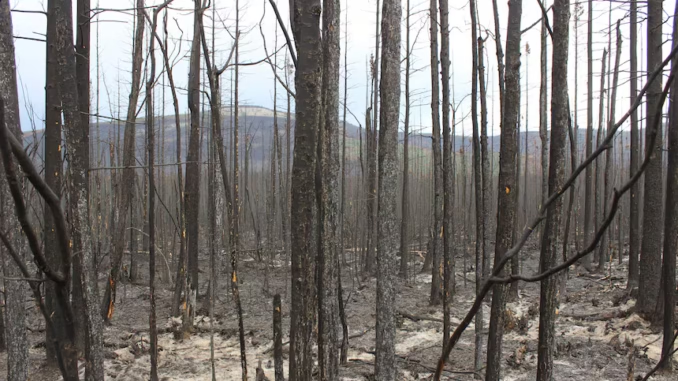
Northwest Territories Faces Early Wildfire Threat Amid Drought Concerns
Wildfire crews across the Northwest Territories are battling three active fires as officials warn that dry conditions could make this year’s wildfire season especially dangerous.
According to territorial authorities, two of the blazes were caused by human activity, raising renewed concerns over fire safety across northern Canada.
One fire in the South Slave region has already been brought under control. Officials said the blaze, roughly the size of a large house, began Monday after what investigators described as an escaped campfire.
Meanwhile, firefighters are continuing efforts against an out-of-control overwintering wildfire in the same region. The fire, which covers approximately 0.05 square kilometres, was first detected through infrared scanning along the perimeter of last year’s Fort Providence wildfire zone.
Overwinter fires are particularly dangerous because they can remain hidden underground for months before reigniting under warmer conditions.
Authorities said crews are now targeting underground hotspots using advanced scanning technology and heavy equipment to eliminate lingering heat sources before the flames spread further.
Despite the ongoing operations, officials confirmed there is currently no immediate danger to Fort Providence residents, nearby cabins, or critical infrastructure.
Another wildfire burning in the North Slave region remains out of control. The fire, estimated at approximately 0.001 square kilometres — comparable in size to a Canadian Football League end zone — also appears to be human-caused.
The latest fires come as emergency officials continue warning about severe drought conditions affecting parts of the territory. Environmental experts fear the dry landscape could fuel faster wildfire growth and create a challenging season for firefighting crews.
As temperatures rise and vegetation dries out, authorities are urging residents and visitors to exercise extreme caution with campfires and outdoor activities to help prevent additional wildfires across the region.
NEWS DESK
PRESS UPDATE