
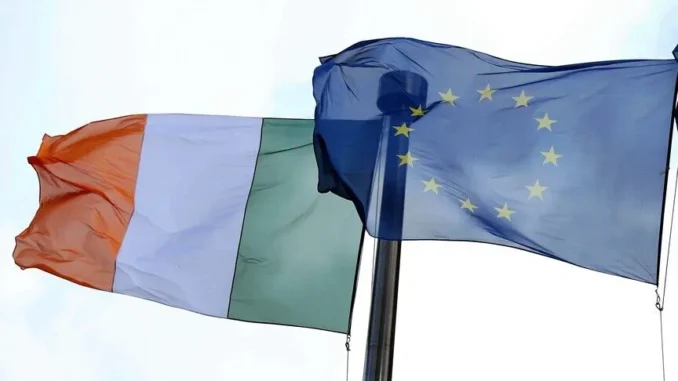
Ireland Aims to Secure EU Long-Term Budget Agreement Before Year-End
Ireland has pledged to work towards securing an agreement on the European Union’s next long-term budget before the end of the year, with Taoiseach Micheál Martin identifying the issue as a central priority during Ireland’s presidency of the Council of the European Union.
Speaking alongside German Chancellor Friedrich Merz in Dublin, Martin said Ireland would engage closely with all EU member states to help bridge differences over the bloc’s next Multiannual Financial Framework (MFF).
He stressed that the European Union requires a budget capable of supporting its future ambitions while remaining mindful of current economic realities. According to Martin, Ireland will spend the coming months consulting member states before presenting a revised budget proposal in October aimed at narrowing differences and building consensus.
The Taoiseach expressed confidence that negotiations could conclude successfully before the end of the year, saying Ireland’s role as Council president is to carefully consider the priorities of every member state and identify areas where compromise is possible.
Beyond budget negotiations, Martin said strengthening Europe’s economic competitiveness remains a key objective of Ireland’s presidency. He highlighted the One Europe, One Market Roadmap as a guiding framework for improving the single market, reducing regulatory burdens, expanding trade opportunities, addressing energy costs and supporting the EU’s digital and climate transitions.
Ireland also reaffirmed its commitment to advancing EU enlargement, with Martin saying countries seeking membership should be able to progress as quickly as their reform efforts allow.
The leaders also discussed international issues, including Russia’s war in Ukraine. Martin reiterated Ireland’s continued support for Ukraine, emphasising the importance of helping the country achieve a just and lasting peace.
Germany has previously argued for a more restrained EU budget, with Chancellor Merz maintaining that the bloc should prioritise spending efficiency rather than significant budget expansion. Berlin is among several member states advocating a smaller financial framework than the European Commission’s proposed €2 trillion spending plan.
NEWS DESK
PRESS UPDATE