
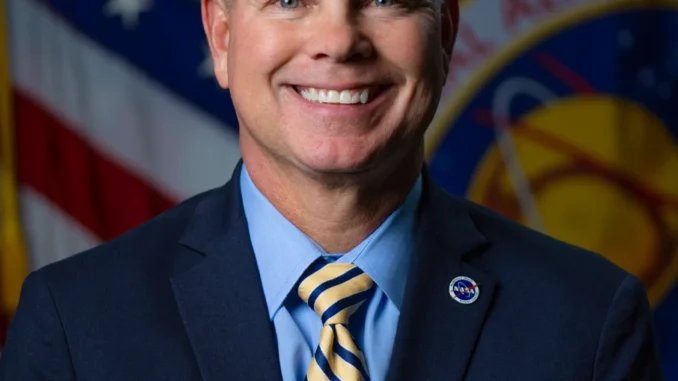
NASA Administrator Bill Nelson announced on Monday the appointment of John Bailey as the director of NASA’s Stennis Space Center, located near Bay St. Louis, Mississippi. Bailey, who has been acting as the interim director since January, will now officially lead the center, which plays a pivotal role in the agency’s propulsion testing and aerospace development.
Nelson praised Bailey’s extensive experience and leadership capabilities, stating, “John will build on his nearly 35 years of federal service to lead our talented workforce at Stennis, a vital hub for our aerospace, technology, and deep space exploration efforts.” He expressed confidence in Bailey’s ability to guide Stennis, the nation’s largest and premier propulsion test site, towards even greater achievements.
Stennis Space Center is not only significant for testing the Space Launch System (SLS) core stages used in missions like Artemis I but is also crucial for testing all RS-25 engines for future SLS launches. Additionally, the center is set to conduct tests on the new exploration upper stage for upcoming Artemis missions to the Moon and beyond.
The center is recognized for its collaboration with commercial aerospace companies and its role in expanding as an aerospace and technology hub. It is also involved in the development of intelligent and autonomous systems essential for deep space exploration.
Reflecting on his appointment, Bailey expressed his honor in leading Stennis’ dedicated team, remarking, “This is an exciting time for NASA Stennis, and I am deeply honored to lead its great family of employees.” He emphasized his commitment to supporting NASA’s missions and initiatives, looking forward to a future filled with shared success.
Bailey’s career includes over three decades of federal service with the U.S. Air Force and NASA, starting in electronic communications testing and advancing through significant leadership roles at NASA Stennis. An Alabama native, he holds a bachelor’s degree in electrical engineering and an MBA from the University of South Alabama.–NASA Press Release