
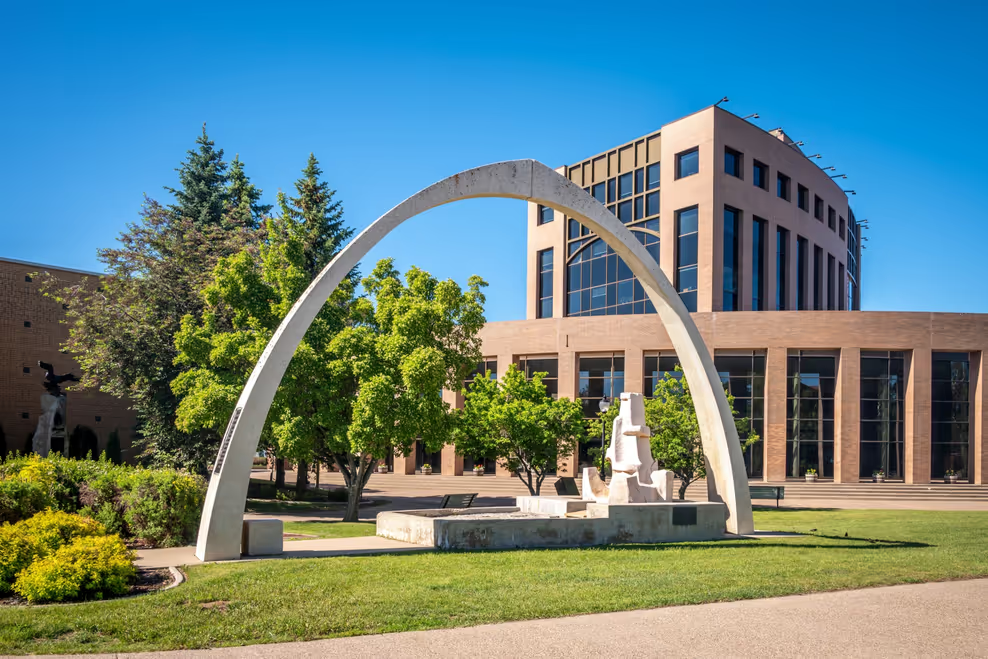
Lethbridge ranked among Canada’s driest cities
Southern Alberta city gains national attention
Lethbridge has been named one of the driest cities in Canada, according to a recent ranking by World Atlas.
The publication compiled a list of the 10 driest cities in Canada, and Lethbridge secured a place on that list. The city sits about two hours south of Calgary and roughly one hour north of the United States–Canada border. It is also the southernmost city in the province of Alberta.
Low precipitation shapes the region
According to the report, Lethbridge receives an average of 14.7 inches (372.5 millimeters) of precipitation each year based on climate data from 1991 to 2020.
Experts say the region’s dry climate results from several geographic factors. First, southern Alberta lies far from major oceans, which reduces the amount of moisture reaching the area. In addition, regional wind patterns limit rainfall across the southern prairie landscape.
Furthermore, the nearby Rocky Mountains influence weather patterns in western Canada. While Pacific Ocean moisture reaches the mountains, much of it does not travel far enough inland to bring heavy rainfall to southern Alberta.
Historical roots of the city
The city takes its name from William Lethbridge, who served as the first president of the North Western Coal and Navigation Company. The company belonged to Alexander Galt, who often named towns and streets after individuals to attract investors.
Coal industry shaped early development
Lethbridge also holds a strong connection to Canada’s early coal industry. Coal mines opened in the region in 1874 and 1882, which helped the city grow rapidly.
During World War I, local mines produced more than one million tons of coal each year, making the area an important industrial center.
However, the industry began to decline as oil and natural gas production expanded in western Canada. Eventually, the last coal mine in the region closed in 1957.
Today, the city remains known for its dry climate and its historic role in Alberta’s energy development.
NEWS DESK
PRESS UPDATE