
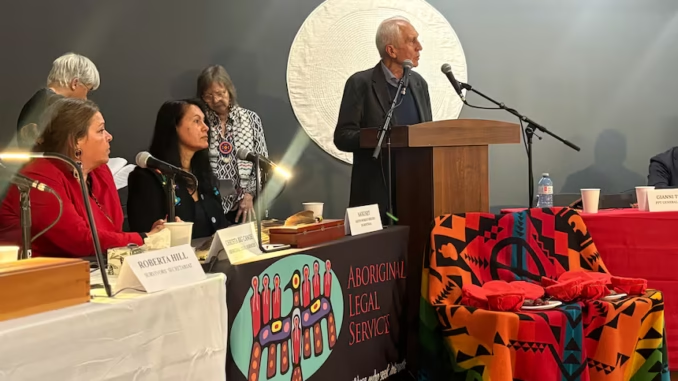
Tribunal Ruling Accuses Canada Indigenous Genocide
An international tribunal has issued a preliminary ruling stating that Canada’s actions toward Indigenous Peoples amount to an ongoing genocide, following a week of testimony focused on residential schools, missing children, and unmarked burial sites.
The decision was announced by seven judges from the Permanent Peoples’ Tribunal, an independent international body that examines allegations of human rights violations worldwide. The hearings were held in Montreal after being requested by the Native Women’s Shelter of Montreal.
Throughout the proceedings, survivors, experts, and community representatives presented evidence describing the long-lasting effects of Canada’s residential school system. Witnesses recounted experiences of forced family separation, cultural suppression, physical abuse, sexual violence, and deep psychological trauma that have affected multiple generations of Indigenous families.
The tribunal concluded that Canada bears legal, political, and moral responsibility for policies and actions that contributed to the destruction of Indigenous cultures and communities. Judges argued that the consequences continue to impact Indigenous Peoples today through ongoing social, cultural, and psychological harm.
Members of the tribunal also criticized what they described as persistent failures to recognize Indigenous sovereignty, protect Indigenous rights, and ensure accountability for historical injustices. According to the panel, these patterns indicate a continuation of harmful practices rather than isolated historical events.
The Government of Canada declined to participate in the hearings, leaving an empty chair to symbolize its absence during the proceedings. Federal authorities had not immediately responded publicly to the tribunal’s interim findings.
Legal experts who testified emphasized that genocide, under international law, extends beyond mass killings. They noted that acts such as forcibly removing children from their communities, inflicting severe physical or mental harm, and creating conditions that threaten a group’s survival may also meet the legal definition of genocide when carried out with destructive intent.
Indigenous advocates welcomed the ruling, describing it as an important step toward recognition, justice, and accountability for survivors and families affected by the residential school system. They also called on the public to challenge efforts that dismiss or deny survivor testimonies and documented historical abuses.
The tribunal is expected to continue reviewing evidence before issuing its final conclusions, while the ruling has already renewed international attention on Canada’s treatment of Indigenous Peoples and the lasting legacy of residential schools.
NEWS DESK
PRESS UPDATE