
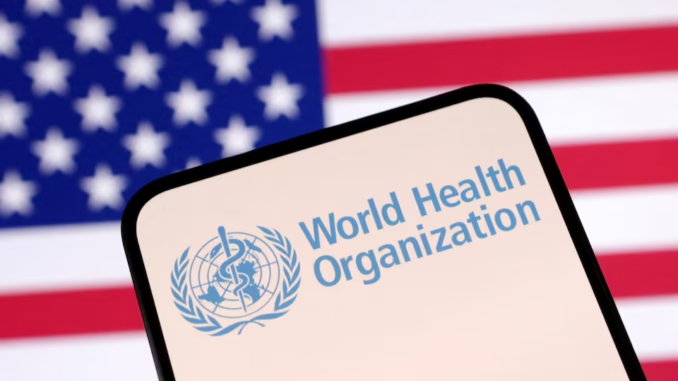
US Exit From WHO Raises Concerns as California Seeks Global Health Links
Washington Ends Formal Ties With WHO
The United States officially withdrew from the World Health Organization (WHO) on January 22, following an executive order signed by President Donald Trump on the first day of his 2025 presidency. The decision has raised concerns among public-health experts, who warn that the move could delay the country’s access to early information on emerging disease outbreaks.
Under the withdrawal plan, the US Health and State Departments will continue limited engagement with the WHO only to manage the exit process. However, officials have confirmed that broader cooperation will end once the withdrawal is complete.
Experts Warn of Public Health Risks
Health specialists caution that leaving the WHO may weaken the nation’s ability to respond quickly to global health threats. The organization plays a key role in sharing outbreak data, coordinating international responses, and issuing early warnings. Without full access to these systems, experts fear the US could face delays in detecting and managing future epidemics.
California Charts an Independent Course
Meanwhile, California leaders are preparing for possible consequences of the federal decision. Governor Gavin Newsom has announced plans to connect the state directly with international disease-monitoring networks. Through this approach, California aims to protect its population of nearly 39 million residents by maintaining access to real-time global health data.
State officials say this strategy will allow California to monitor emerging health threats independently and respond faster if new outbreaks appear. The move reflects growing concern at the state level about gaps left by the federal withdrawal.
A Broader Shift in Health Strategy
As the US steps back from global health cooperation, California’s actions highlight a widening divide between federal policy and state-level public health planning. While national authorities scale down engagement with the WHO, California is seeking alternative global partnerships to safeguard public health.
NEWS DESK
PRESS UPDATE