
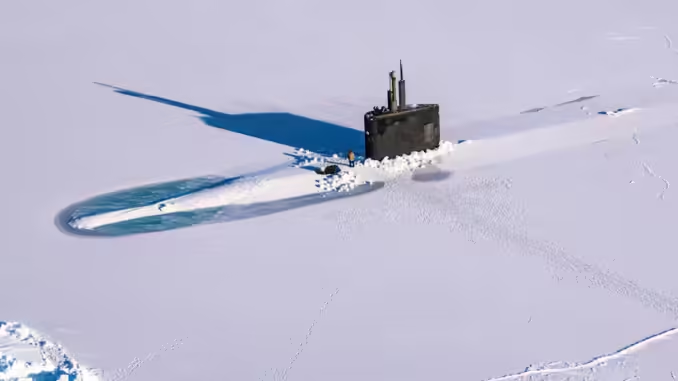
The Defense Department has unveiled its 2024 Arctic Strategy, addressing the impact of environmental changes on the Arctic region and outlining the implications for U.S. security and preparedness. During a Pentagon briefing, Deputy Defense Secretary Kathleen Hicks emphasized the Arctic’s critical role in national defense and sovereignty. “Our Arctic strategy will guide the department’s efforts to ensure that the Arctic remains a secure and stable region,” Hicks stated.
Eight nations, including the U.S., have strategic interests in the Arctic, a region increasingly accessible due to climate change and melting ice. This opens new opportunities for commerce and resource exploitation but also raises security risks.
“Climate change is fundamentally altering the Arctic, affecting geopolitics and U.S. defense missions,” Hicks noted. She highlighted the need for the U.S. to adapt its military capabilities to the changing environment and maintain readiness to protect warfighters and prevent conflict.
The strategy acknowledges the growing presence of non-Arctic nations like China, which operates three icebreakers and has conducted military operations with Russia in the Arctic. “While not an Arctic state, the PRC seeks greater influence and access in the region,” Hicks warned, expressing concern over China’s ambitions to reshape international order.
Russia’s significant military presence in the Arctic, including reopened Soviet-era installations, poses an acute threat to regional security. Hicks pointed to the increasing cooperation between Russia and China in the Arctic, further complicating U.S. defense strategies.
The DOD’s strategy focuses on three main efforts: enhancing joint force capabilities, strengthening alliances, and maintaining a robust U.S. presence in the Arctic. “Our Arctic strategy adopts a ‘monitor and respond’ approach,” Hicks explained, emphasizing domain awareness, intelligence, surveillance, and reconnaissance.
Iris Ferguson, Deputy Assistant Secretary of Defense for Arctic and Global Resilience, highlighted the importance of improving domain awareness and detecting threats in collaboration with Canadian allies. The strategy also calls for investments in communications, infrastructure, and cold-weather equipment.
With NATO members forming the majority of Arctic nations, the U.S. plans to leverage these partnerships to bolster security. The strategy encourages increased operations and military exercises to ensure preparedness in the Arctic environment.
“Exercising tactics and equipment is essential for success and survival in the Arctic,” Ferguson emphasized, noting that the strategy includes service-specific, joint, interagency, and combined exercises to build operational experience.
The 2024 Arctic Strategy underscores the U.S. commitment to maintaining stability and security in the rapidly changing Arctic region.–News Desk