
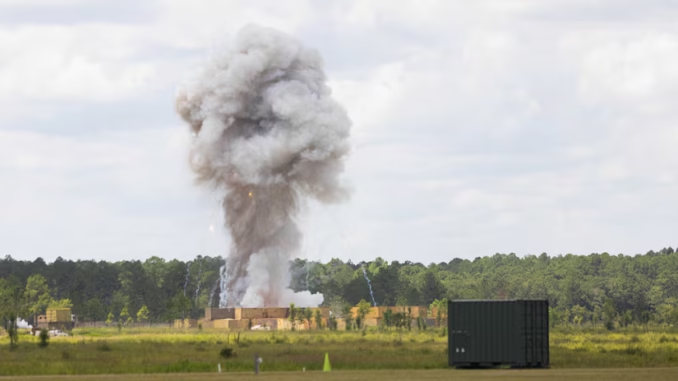
Explosive Ordnance Disposal Concussion Study Close to Enrollment Target
Sept. 18, 2025 | By Office of the Assistant Secretary of War for Health Affairs/Military Health System
Study Nears Goal
Researchers at the War Department’s top explosive ordnance disposal (EOD) training school are making strong progress in a major study on concussions and blast exposure among EOD technicians.
Since October 2022, the team has enrolled 1,908 participants at the Naval School Explosive Ordnance Disposal, located at Eglin Air Force Base, Florida. This number represents 95% of the target goal of 2,000 participants.
Training and Recruitment
The school trains about 1,350 students each year from all branches of the U.S. military. Its eight-month course includes eight technical divisions, along with an additional underwater training phase for Navy personnel. The program’s demanding pace reflects the high physical and mental standards required in the EOD field.
Recruitment methods are tailored to the school’s intense environment. The study team holds briefings at Army, Marine, and Air Force indoctrinations, as well as at the Advanced Improvised Explosive Devices Division course for operational technicians. They also work with the base’s EOD unit each year to connect with service members arriving on new assignments.
“Meeting students where they are — both physically and mentally — has been critical,” explained Sarah Delgado, one of the study’s researchers. “The training schedule leaves little free time, so even small obstacles, like traveling across campus, can make follow-up participation difficult.”
Building Trust and Engagement
Currently, the study has a 36% follow-up rate. Long distances and the intensity of the curriculum make retention challenging. To address this, staff members actively engage with the EOD community by volunteering at school events and teaching classes linked to their research. These efforts help establish credibility and build lasting trust with students.
A Key Addition to the CARE Consortium
This EOD study group is now part of the Concussion, Assessment, Research, and Education (CARE) Consortium’s military initiative. Unlike earlier groups, this cohort represents enlisted service members with repeated exposure to blasts throughout their careers. Their involvement is crucial for understanding the long-term risks to brain health in this high-risk field.
School leaders and instructors have also played an important role in supporting the project.
“EOD technicians must operate at the highest levels in some of the most dangerous environments,” said Navy Lt. Colin McNamara, senior medical officer at the school. “This research is not just about data collection — it is about protecting the long-term health and readiness of our force.”
Looking Ahead
As the study approaches its enrollment goal, researchers see this as a significant step forward in addressing one of today’s most urgent military health concerns: the lasting effects of concussions and blast exposure on service members.
NEWS DESK
PRESS UPDATE