
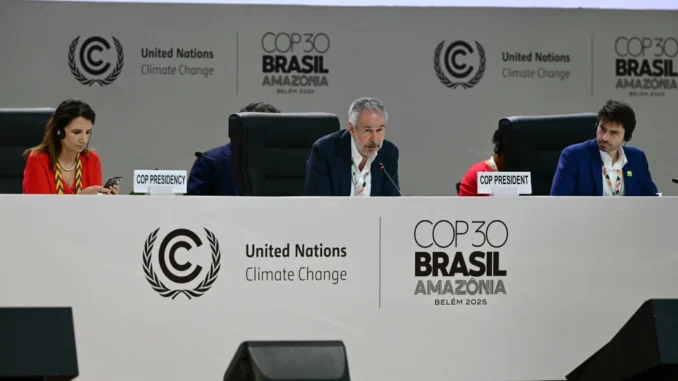
Global Deal Reached Without Fossil Fuel Language
World governments approved a compromise climate agreement on Saturday at the COP30 summit in Brazil. The deal increases financial support for developing countries struggling with climate change but avoids any reference to phasing out fossil fuels — the main driver of global warming.
Countries pushed the pact through in an effort to show global cooperation, even though the United States, the world’s largest historical emitter, did not send an official delegation.
Tough Negotiations Highlight Divisions
The agreement came only after two weeks of tense discussions in the Amazon city of Belem, extending well past the deadline. The process revealed deep divides between richer and poorer nations and exposed disagreements among countries that rely heavily on oil, gas, and coal.
COP30 President Andre Correa do Lago acknowledged the difficulties, saying negotiations had tested all sides. “We know many of you wanted stronger language on several issues,” he told delegates.
The European Union had insisted on including a commitment to transition away from fossil fuels. However, it eventually withdrew its demand after Saudi Arabia and other major producers firmly opposed any such mention.
EU climate commissioner Wopke Hoekstra said the bloc accepted the final text because it still took “a step in the right direction.”
Sharp Criticism From Some Delegates
Despite the compromise, several countries expressed frustration.
Panama’s climate negotiator Juan Carlos Monterrey strongly criticized the outcome, saying, “A climate decision that cannot even say fossil fuels is not neutrality, it is complicity.”
Finance Commitments Expanded
The final deal introduces a voluntary initiative aimed at accelerating climate action so nations can meet their existing emissions-reduction pledges. It also calls on wealthy countries to triple the financial assistance they provide to developing nations for climate adaptation by 2035.
Scientists warn that current national commitments, although improved, still fall short of limiting global warming to 1.5°C above pre-industrial levels — a crucial threshold to avoid severe climate impacts.
Developing nations stress that they need urgent, predictable funding as they confront rising sea levels, worsening heat waves, droughts, floods, and powerful storms.
Avinash Persaud, Special Advisor to the President of the Inter-American Development Bank, said the deal’s focus on finance was necessary given escalating climate impacts. However, he noted the world still failed to deliver faster, large-scale support for loss and damage.
Fossil Fuel Standoff Delayed Agreement
Disputes between the European Union and the Arab Group over fossil fuel language stalled the talks past Friday’s deadline. Delegates continued negotiating through the night until they reached a compromise that removed any direct mention of oil, gas, or coal.
NEWS DESK
PRESS UPDATE