
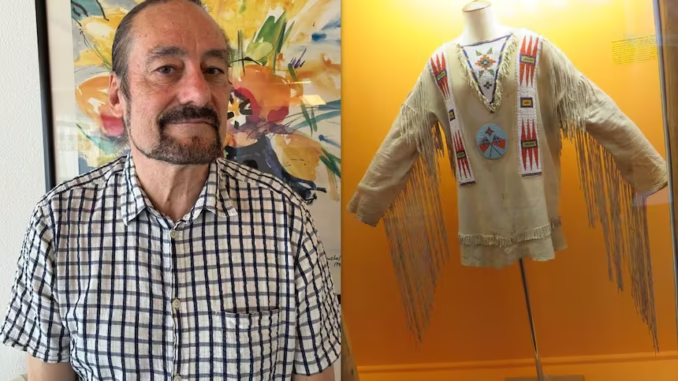
ZURICH: A Swiss collector who spent decades assembling one of Europe’s largest private collections of Indigenous artifacts is seeking to return thousands of culturally significant items to the communities from which they originated.
Vincent Escriba, a 67-year-old former museum owner based in Zurich, has amassed approximately 3,500 Indigenous ceremonial and historical objects over the past five decades. His collection includes cradleboards, sacred pipes, traditional clothing, headdresses, beadwork, firearms, and other artifacts connected to Indigenous nations across Canada and the United States.
After retiring and closing his museum last year, Escriba says he wants the collection to be reunited with Indigenous communities rather than dispersed among private buyers and collectors.
“I want these items to return to the people they belong to,” Escriba said, explaining that he has no heirs to inherit the collection and wishes to ensure the artifacts remain preserved and accessible to Indigenous nations.
The collection, which Escriba estimates is worth between $12 million and $14 million, has attracted interest from Indigenous leaders and advocates in Manitoba. Discussions are underway regarding a potential initiative to repatriate the items to First Nations, Métis, Inuit, and tribal communities in Canada and the United States.
Supporters of the effort argue that the artifacts represent far more than historical objects. Many Indigenous communities regard ceremonial items and cultural belongings as living connections to their ancestors, traditions, and identities. Their return is viewed as an important step toward cultural restoration and reconciliation.
A delegation of Indigenous representatives recently travelled to Switzerland to inspect the collection before the museum closed. The group is now seeking financial support from governments, organizations, and Indigenous communities to secure the collection and facilitate its return.
Advocates estimate that approximately $20 million may be required to complete the repatriation process, covering the purchase of the artifacts as well as authentication, transportation, conservation, and cataloguing costs.
Among the collection’s most notable pieces are intricately beaded bandoliers, traditional moccasins dating back to the 19th century, elaborate feathered headdresses, and items believed to be associated with Indigenous communities connected to the era of the Battle of the Little Bighorn.
Experts say private collections of Indigenous artifacts remain common worldwide, reflecting a period in the early 20th century when museums and collectors aggressively acquired cultural objects from Indigenous peoples. Today, however, growing international efforts are focused on returning such items to their rightful communities.
As negotiations continue, Indigenous advocates hope the collection’s eventual return will help preserve cultural heritage and strengthen connections between future generations and their ancestral traditions.
NEWS DESK
PRESS UPDATE