
Millions of Americans Explore Canadian Citizenship by Descent
Amid growing political tensions in the United States, many Americans are looking to Canada and their ancestral roots as a potential “Plan B.”
Lynn Rutman, a Cape Cod, Massachusetts resident with family connections to Quebec and Nova Scotia dating back generations, expressed concern over the U.S. political climate, particularly recent immigration policies and long-standing ideological divisions.
“It’s not just me; many of us are worried,” Rutman said. She has now joined thousands applying for proof of Canadian citizenship following recent changes to Canada’s citizenship laws.
Expanded Citizenship by Descent
Previously, Canadian citizenship by descent was limited to the first generation born abroad. However, Bill C-3, An Act to Amend the Citizenship Act (2025), now retroactively grants citizenship to people born before December 15, 2025, who would have qualified if not for the first-generation restriction.
“We want that safety net, so we have a place to go if things worsen here,” Rutman explained.
Cassandra Fultz, a regulated Canadian immigration consultant, noted that the court ruling declaring the first-generation limit unconstitutional has made the citizenship certificate “the hottest ticket in 2026.” She added that increased global uncertainty has prompted many Americans to seek a second passport.
“There’s no limit on how far back you can go, as long as you can prove it,” Fultz emphasized.
Families Benefit from New Pathways
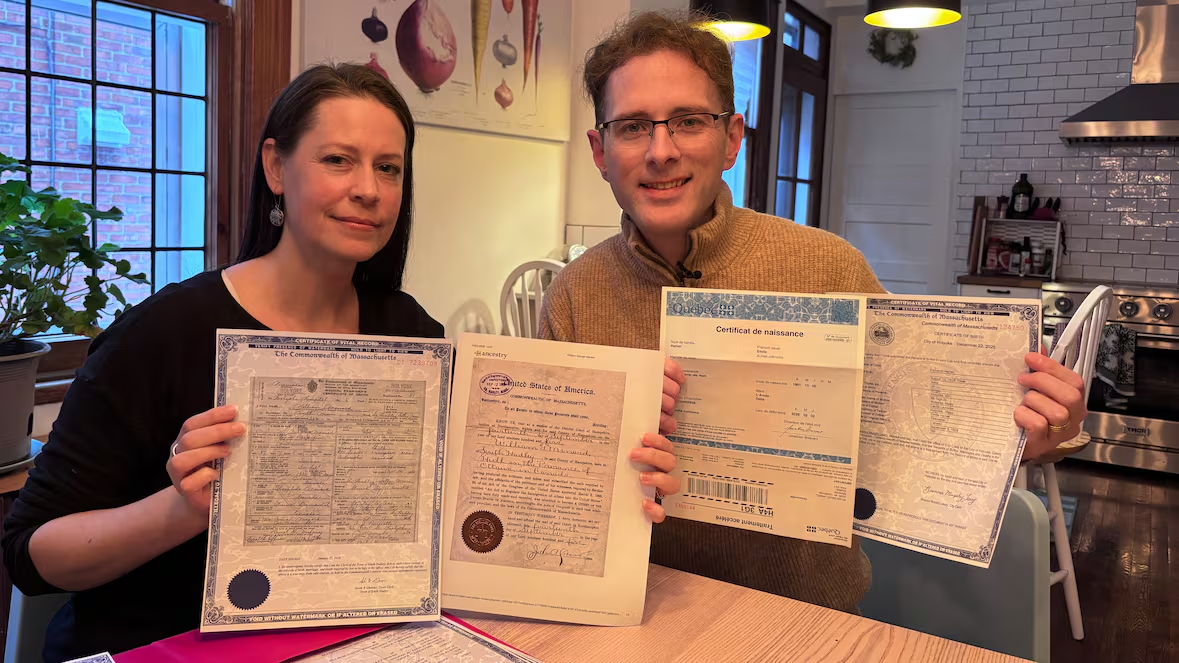
For families like Mary and Ryan Hamel, the law brings relief. The couple, who moved to Quebec from Massachusetts during the COVID-19 pandemic as temporary foreign workers, began researching their French Canadian ancestry to qualify for citizenship.
Applicants must provide documents such as birth or baptismal certificates to show parentage, and marriage certificates to confirm name changes, which were common for women.
Fultz explained that unofficial name changes also pose challenges. For instance, French names like Pierre were often anglicized to Pete in the U.S. In such cases, supporting documents such as death certificates, census records, property deeds, or court records can help verify an ancestor’s identity.
Record Requests Surge in Quebec
In Quebec, official records dating back to 1621 are maintained by the Bibliothèque et Archives nationales du Québec (BAnQ), with more recent documents available through the Directeur de l’état civil.
Archivist Sarah Hanahem reported a dramatic increase in requests from Americans. “In January 2025, we had 32 requests for certified records; in January 2026, that number exceeded 1,000,” she said.
NEWS DESK
PRESS UPDATE