
U.S. Senator Calls for Improved Canada Relations as Trade Dispute Impacts Tourism and Business
A growing trade dispute between the United States and Canada has prompted renewed calls from U.S. lawmakers to rebuild bilateral relations, with one senator warning that escalating political rhetoric and tariffs are taking a toll on tourism and local businesses.
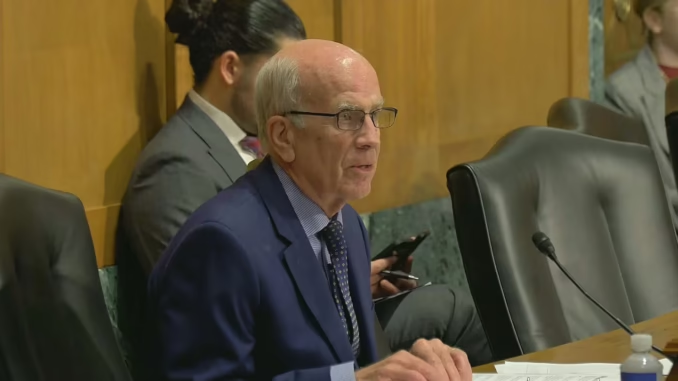
During a Senate hearing on July 22, Vermont Senator Peter Welch urged U.S. Trade Representative Jamieson Greer to take steps toward restoring stronger ties with Canada. Welch said tourism in Vermont has fallen by nearly 40 percent, attributing much of the decline to strained diplomatic relations and comments made by President Donald Trump regarding Canada.
The senator argued that deteriorating relations are affecting communities on both sides of the border. He pointed to businesses in Vermont—including an auto repair shop, a cheesemaker, a brewery, and a sporting goods retailer—that have experienced rising costs, layoffs, or reduced operations amid the ongoing trade conflict.
Welch emphasized the importance of Canada’s longstanding partnership with the United States, describing the relationship as valuable not only economically but also culturally and personally. He called for efforts to ease tensions and strengthen cooperation between the neighboring countries.
Greer defended the administration’s trade position, stating that U.S. measures are intended to address Canadian trade restrictions, including provincial bans on American liquor sales, limits on U.S. automobile exports, and barriers affecting American dairy products such as cheese.
The latest tensions follow President Trump’s announcement of 50 percent tariffs on a range of Canadian goods, scheduled to take effect on August 19. Unlike previous measures, the proposed tariffs would reportedly apply without exemptions under the Canada-United States-Mexico Agreement (CUSMA), adding further uncertainty to cross-border trade and economic relations.
As Canadian premiers meet to discuss their response, both governments continue to face mounting pressure from businesses and regional leaders seeking a resolution that protects jobs, trade, and the long-standing partnership between the two countries.
NEWS DESK
PRESS UPDATE