
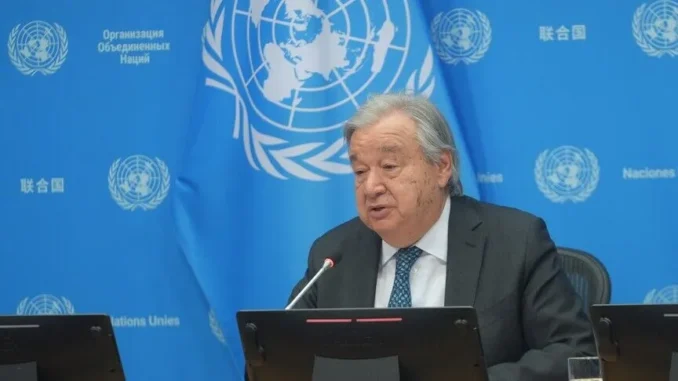
NEW YORK — United Nations Secretary-General António Guterres has voiced deep concern over the escalating military tensions in the Middle East, urging all parties to immediately reduce hostilities and return to diplomatic negotiations.
Speaking on Wednesday, UN spokesperson Stéphane Dujarric said the secretary-general is closely monitoring developments and warned that continued escalation could have severe humanitarian, economic and security consequences.
According to Dujarric, Guterres is calling on all sides to exercise maximum restraint, emphasizing that renewed large-scale conflict would place civilians at significant risk while undermining international peace and global economic stability.
The UN chief also renewed his appeal for the protection of international navigation through the Strait of Hormuz, stressing that freedom of navigation must be upheld in accordance with international law.
“The exercise of navigational rights and freedoms must be respected by all parties in accordance with international law,” Dujarric said.
The statement comes as tensions between the United States and Iran continue to intensify around the strategically important Strait of Hormuz. The two countries have exchanged military strikes in recent days despite a Pakistan-mediated memorandum of understanding intended to reduce hostilities and create a pathway toward a lasting peace agreement.
The Strait of Hormuz is one of the world’s most critical maritime routes, handling a substantial share of global crude oil and liquefied natural gas exports. Any disruption to shipping through the waterway could have far-reaching consequences for international energy markets and the global economy.
The United Nations has reiterated its call for dialogue, warning that diplomacy remains the only viable path to preventing a broader regional conflict.
NEWS DESK
PRESS UPDATE