
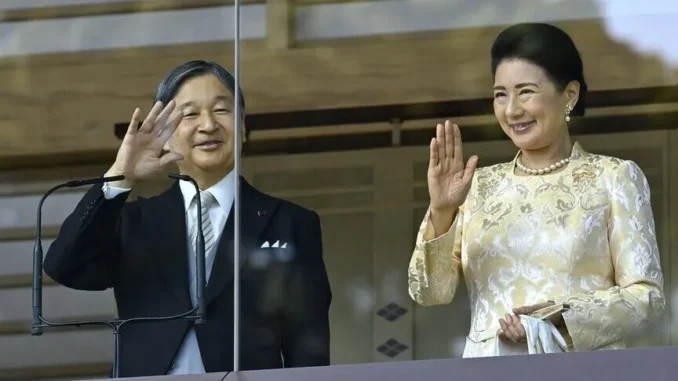
TOKYO — Japan is confronting a growing constitutional and political dilemma as the country’s imperial family continues to shrink, prompting lawmakers to consider reforms aimed at preserving one of the world’s oldest hereditary monarchies.
Parliament is expected to vote on legislation designed to address the declining number of imperial family members. While the proposal does not alter the centuries-old male-only succession system, it seeks to ensure the monarchy can continue carrying out its constitutional and ceremonial responsibilities.
Why is Japan’s imperial family shrinking?
The size of Japan’s Imperial House has steadily declined due to long-standing succession laws and demographic trends. Under the Imperial House Law of 1947, only men descended through the paternal imperial line are eligible to inherit the Chrysanthemum Throne.
In addition, female members of the imperial family lose their royal status after marrying commoners, further reducing the number of working royals available to perform official duties. Today, fewer than 20 members remain in the imperial family, with only a small number of eligible male heirs.
Why is this becoming a constitutional issue?
Japan’s Constitution recognizes the emperor as the symbol of the State and the unity of the people, making the imperial institution an integral part of the country’s constitutional framework.
Although the Constitution leaves succession rules to the Imperial House Law, the shrinking royal family has raised concerns over whether the institution can continue fulfilling its ceremonial and national functions under the current system.
Who is currently in line to inherit the throne?
Japan’s succession law allows only male heirs from the paternal imperial lineage to become emperor. The current line of succession includes:
- Crown Prince Akishino, the younger brother of Emperor Naruhito.
- Prince Hisahito, Akishino’s son and the youngest member of the succession line.
- Prince Hitachi, the emperor’s elderly uncle.
With Prince Hisahito being the only heir of his generation, questions about the monarchy’s long-term future have become increasingly pressing.
Why can’t women become emperor?
Current legislation prohibits women from inheriting the throne or passing succession rights to their children.
Although Japan has had several reigning empresses throughout its history, none established a permanent female succession line. Conservative leaders argue that preserving an unbroken paternal lineage is essential to maintaining the legitimacy and historical continuity of the imperial institution.
However, many scholars and members of the public believe allowing female succession would better reflect modern society and help secure the monarchy’s future.
What does the proposed legislation aim to achieve?
Rather than changing succession rules, the bill focuses on expanding the number of active members of the imperial family.
Among the proposals being discussed are allowing female royals to retain their imperial status after marriage and introducing additional measures to support official imperial duties. Lawmakers hope these reforms will address immediate operational challenges without reopening the politically divisive debate over female succession.
Why is the issue politically sensitive?
Any proposal affecting the imperial family carries enormous political and cultural significance in Japan.
Conservative groups strongly oppose changes to the male-only succession system, arguing that it protects the monarchy’s legitimacy and centuries-old traditions. Reform advocates, however, warn that without broader changes, the imperial family will continue shrinking, placing an increasing burden on its remaining members.
What lies ahead?
Although opinion polls have consistently shown strong public support for allowing women to inherit the throne, successive governments have avoided introducing legislation to change the succession law.
For now, policymakers appear focused on practical reforms aimed at maintaining the imperial family’s size and ensuring it can continue fulfilling its constitutional role. Nevertheless, the broader question of female succession remains unresolved and is likely to remain one of Japan’s most significant constitutional debates in the years ahead.
NEWS DESK
PRESS UPDATE