
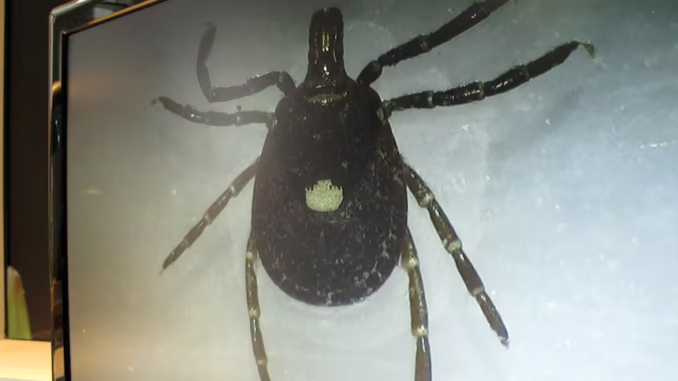
Canadian scientists are raising serious concerns over the growing spread of dangerous tick species migrating from the United States into Canada, warning that the country must prepare for increasing health risks linked to tick-borne diseases.
Researchers say several species carrying harmful pathogens are steadily moving north at an estimated pace of nearly 50 kilometres each year. Among the biggest threats is the lone star tick, an aggressive species capable of triggering a severe allergy to red meat after a single bite.
Canada already hosts more than 40 species of ticks, with the blacklegged tick remaining the most recognized due to its connection with Lyme disease. The illness often begins with flu-like symptoms and a distinctive bull’s-eye rash, but untreated infections can later damage the joints, heart, and nervous system.
At the forefront of the research effort is the newly opened Canadian Tick Research and Innovation Centre at Acadia University. The facility aims to study tick behaviour, track dangerous pathogens, and develop stronger prevention strategies against emerging diseases.
Research director Nicoletta Faraone says public fear surrounding tick-borne illnesses is rapidly increasing, especially since no fully effective vaccine currently exists for Lyme disease and many ticks carry multiple pathogens beyond Lyme bacteria.
Scientists are particularly alarmed by the spread of the lone star tick, which has already established a strong presence in the northeastern United States. In Maine, one resident experienced life-threatening allergic reactions after a bite left her unable to eat beef without suffering severe breathing complications and anaphylactic shock.
The Canadian research centre is now studying several tick species inside secure laboratory environments. Researchers are examining feeding patterns, behaviour, and disease transmission in hopes of creating better repellents and medical responses before these species become fully established across Canada.
Another growing concern involves the Asian long-horned tick, a species feared by livestock farmers because it can cause severe anemia in cattle. Farmers in Nova Scotia have already begun taking preventive measures to protect their herds from potentially devastating financial losses.
Experts warn that climate conditions and environmental changes are helping ticks survive in regions where they previously could not thrive. Farmers and outdoor workers are being encouraged to clear tall grass, inspect animals regularly, and remain alert for signs of infestation.
Researchers also highlighted the danger of rare illnesses such as the Powassan virus, which can be deadly and currently has no specific treatment. Health experts stress that prevention remains the strongest defence, urging Canadians to wear protective clothing, tuck pant legs into socks, and perform frequent tick checks after spending time outdoors.
NEWS DESK
PRESS UPDATE