
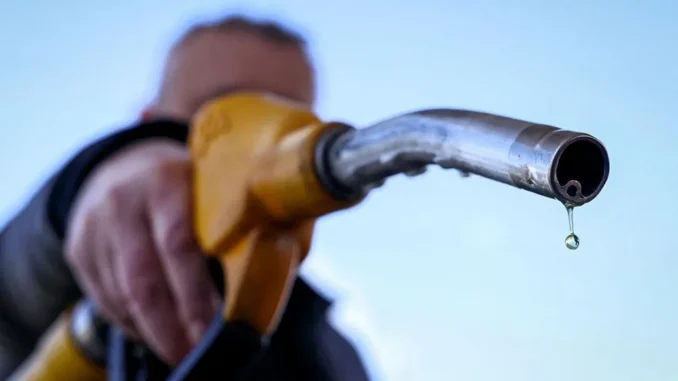
UK Warns Petrol Retailers Over Price Gouging After Oil Price Surge
LONDON
Rachel Reeves warned fuel retailers on Tuesday that the government will not allow excessive petrol pricing following a sharp rise in global oil costs.
Speaking in the House of Commons, Reeves said she plans to meet petrol retailers later this week after noticing large price differences at fuel stations across the country.
Government Responds to Rising Oil Prices
The warning came after oil prices recorded their largest single-day increase in six years. Reeves said maintaining economic stability remains a priority as the government works to reduce inflation, lower interest rates and ease the pressure on household budgets.
She also highlighted several measures introduced by the government to support families dealing with rising living costs.
Measures to Help Households
Reeves said the government had already reduced energy bills and frozen prescription charges and train fares to ease financial pressure on households.
In addition, she pointed to the government’s Fuel Finder Scheme, which allows drivers to compare petrol prices at stations across the country. The program aims to increase transparency and help motorists locate cheaper fuel.
Large Price Differences Raise Concerns
According to Reeves, some petrol stations charged almost 180 pence per litre on Monday, while others sold fuel for less than 130 pence per litre.
She said such large differences raise concerns about possible price gouging. Therefore, the government intends to discuss the issue directly with retailers to ensure fair pricing for consumers.
Debate Over Fuel Duty Policy
The chancellor also confirmed that the temporary 5 pence-per-litre fuel duty reduction, introduced in 2022, will begin to phase out in September 2026. The tax will then gradually increase until it returns to its previous level in 2027.
However, opposition parties have urged the government to abandon the planned increase and maintain the current tax rate.
The Liberal Democrats, Conservative Party and Reform UK have all called on the chancellor to cancel the change.
Global Tensions Disrupt Oil Markets
Meanwhile, tensions in the Middle East have intensified volatility in energy markets. Following military strikes by the United States and Israel on Iran, Iran responded with missile attacks and actions that disrupted shipping in the Strait of Hormuz.
The route normally carries about 20 million barrels of oil per day and handles roughly 20% of global liquefied natural gas trade, much of which supplies Asian markets.
Because of the disruption, exporters are searching for alternative shipping routes. At the same time, reduced shipments of crop nutrients used in fertilizers could affect global agriculture.
Concerns Over Food Supply and Energy Costs
Analysts warn that rising energy prices and higher shipping costs could strain global food supply chains and push food prices upward worldwide.
Earlier this week, Donald Trump warned that any attempt by Iran to block oil shipments through the Strait of Hormuz would trigger a response “20 times harder” than previous US military actions.
NEWS DESK
PRESS UPDATE