
European Allies and Ukraine Set Five Conditions for Future Peace Negotiations with Russia
Ukraine and its major European allies have jointly outlined five key conditions for any future peace agreement with Russia, following high-level talks in London involving Ukraine, the United Kingdom, France and Germany.
In a joint statement, Ukrainian President Volodymyr Zelensky, UK Prime Minister Sir Keir Starmer, French President Emmanuel Macron and German Chancellor Friedrich Merz reaffirmed their commitment to supporting Ukraine and stressed the need for a “just and lasting” resolution to the ongoing conflict.
The proposed framework includes an immediate halt to hostilities, the initiation of negotiations based on current battlefield positions, and strong security guarantees to ensure Ukraine’s long-term protection.
The leaders also emphasized that Ukraine’s right to determine its own security alliances must be fully respected, indirectly addressing concerns over NATO membership restrictions demanded by Moscow.
Additionally, the statement highlighted the importance of continued involvement from the United States in any peace process, even as Washington’s focus shifts toward other global crises.
The E3 group—comprising the UK, France and Germany—alongside Ukraine, also expressed support for Ukrainian efforts to open direct dialogue with Russia, with participation from both Europe and the US.
Recent developments on the battlefield underscore the urgency of diplomatic efforts. Russian forces have intensified missile and drone strikes across Ukraine, while Ukrainian forces have reportedly expanded their ability to strike targets deeper inside Russian territory.
Ukrainian officials also reported a drone strike near Russia’s second-largest city, St. Petersburg, and continued attacks on regions such as Zaporizhzhia, where civilian casualties have been reported.
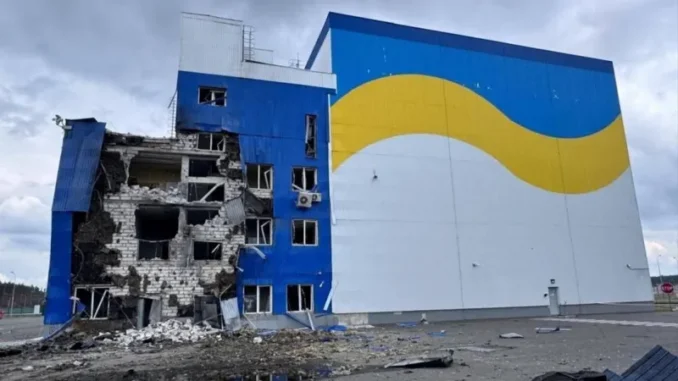
Tensions escalated further after a drone strike damaged infrastructure near the Chornobyl nuclear site, raising renewed concerns about nuclear safety. Ukrainian authorities accused Russia of deliberately targeting critical facilities, though no injuries were reported and radiation levels remained stable.
The conflict, which began with Russia’s full-scale invasion of Ukraine in 2022, continues to produce significant military and humanitarian consequences. Both sides have recently intensified operations while diplomatic efforts remain ongoing but unresolved.
European leaders reiterated that any future settlement must ensure Ukraine’s sovereignty, security and freedom of choice in international alliances, while maintaining pressure for a negotiated end to the war.
NEWS DESK
PRESS UPDATE