
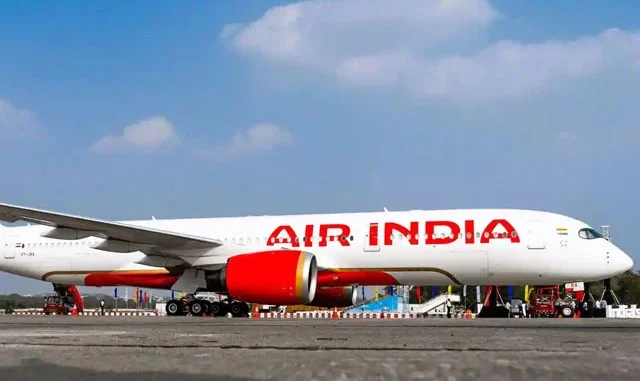
Air India reported that rerouting flights around Pakistani airspace over the past 40 days has cost the airline approximately 8.2 billion rupees (about 98 million US dollars). The diversion has increased flight durations and fuel consumption, driving daily losses to around 200 million rupees (approximately 2.4 million US dollars). Chief Executive Officer Campbell Wilson warned that sustaining operations under these conditions is not feasible without a swift resolution.
The airspace closure, imposed by Pakistan following escalating regional tensions, has forced Air India to take longer routes for flights between India and Europe, as well as destinations in North America and the Middle East. Flights that normally crossed Pakistan now detour south over the Arabian Sea or north via Central Asia, adding two to three hours of flight time on average. The extended routes require additional fuel stops and crew expenses, compounding the financial strain.
Air India’s operating margins have shrunk as a result, with the airline burning through cash reserves to cover higher fuel bills and airport fees. Ground handling costs have also risen at alternate refueling points in airports such as Muscat and Dubai. The airline has reduced nonessential expenditures and deferred noncritical capital projects to mitigate losses, but executives say these measures provide only short-term relief.
Industry experts note that Pakistan’s airspace accounts for a critical segment of the most direct polar and subpolar routes between South Asia and Europe or North America. Alternative pathways add distance and complexity, affecting not only Air India but also other carriers operating similar routes. In recent days, several European and Middle Eastern airlines have issued financial warnings as they adjust flight plans to avoid the closure.
Air India has appealed to both Indian and Pakistani authorities to negotiate limited corridor access, emphasizing the broader economic implications. The private carrier argues that prolonged restrictions could weaken trade links and tourism in the region, ultimately harming Pakistan’s own aviation revenues and bilateral commerce.
In response to the mounting losses, Air India is exploring fast-tracked aviation fuel hedging contracts and renegotiating landing fees at stopover airports. The airline is also examining whether chartering alternative aircraft with extended range capabilities could offset part of the cost increase. However, executives stress that these strategies cannot fully replace access to the most direct routes.
International aviation analysts warn that prolonged airspace closures can trigger a ripple effect: higher ticket prices, reduced flight frequencies, and lower passenger confidence. Cargo operators are similarly affected, as longer transit times can delay shipments and inflate logistics costs.
Air India CEO Campbell Wilson concluded that a diplomatic breakthrough is essential. “Our immediate priority is resuming normal flight paths to restore economic viability,” he said in a press briefing. “Continuing to operate under the current airspace constraints is unsustainable and will inevitably force us to reconsider route networks and service levels if not resolved quickly.”
NEWS DESK
PRESS UPDATE