
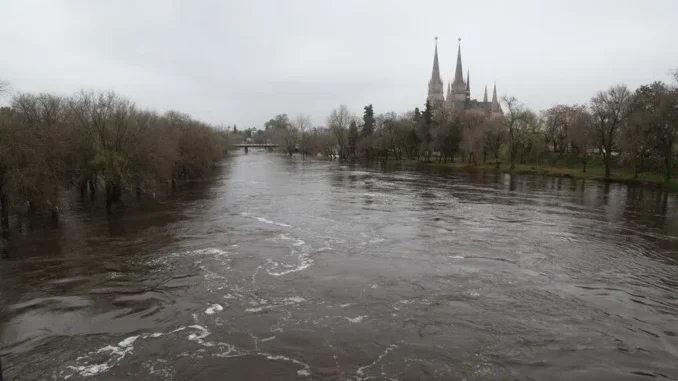
Argentina Floods Kill Two and Force Thousands From Homes Amid El Niño
ISTANBUL — October 24, 2026
Flooding across northeastern Argentina has claimed two lives and displaced more than 2,000 people as rising river levels threaten communities near the country’s borders with Brazil, Paraguay and Uruguay, Argentine newspaper Página/12 reported on Saturday.
Heavy rainfall has caused the Paraná, Uruguay and Iguazú rivers to swell, inundating residential areas and putting additional pressure on communities throughout the region.
In Chaco province, particularly in the towns of Puerto Vilelas and Barranqueras, between 1,200 and 1,300 residents have been forced to leave their homes, according to Gustavo Santos, the provincial deputy secretary for Civil Protection. Santos warned that the situation could persist for several months, with river levels continuing to fluctuate.
Neighbouring Corrientes province has also experienced significant flooding. More than 1,000 people had evacuated their homes, according to a Civil Defense report released on Wednesday.
In Paso de la Patria, a town situated along the Paraná River, floodwaters submerged several neighbourhoods after a protective embankment collapsed under pressure from the rising water.
The flooding has also resulted in fatalities. Two agricultural workers drowned in Corrientes while transferring cattle between islands in an effort to protect the animals from advancing floodwaters.
Authorities have warned that additional rainfall forecast for the upper Paraná and Uruguay river basins could push river levels higher during the coming week, potentially worsening conditions in already affected communities.
Meanwhile, storms that struck Misiones province on Thursday and Friday damaged more than 100 homes. Overflowing streams also forced authorities to close several roads and bridges, according to local media reports.
The impact has extended to the popular Iguazú Falls tourist destination, located along the Argentina–Brazil border. In mid-October, the Iguazú River’s flow reportedly reached ten times its usual seasonal level.
Although several tourist routes have reopened, access to the Devil’s Throat, the waterfall system’s most famous attraction, remains suspended because of the dangerous water conditions.
The flooding comes amid concerns over El Niño, a climate phenomenon associated with unusually warm surface waters in the equatorial Pacific Ocean that can influence rainfall patterns and contribute to extreme weather in different parts of the world.
NEWS DESK
PRESS UPDATE