
Türkiye Approves Mecca Defence Pact With Pakistan and Saudi Arabia
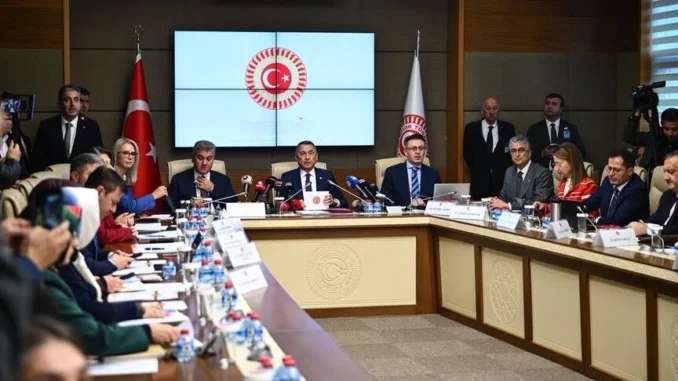
The Turkish parliament’s Foreign Affairs Committee approved a bill on Tuesday to ratify the Mecca Joint Defence Agreement between Türkiye, Pakistan and Saudi Arabia. The decision followed discussions during which Deputy Foreign Minister Levent Gumrukcu addressed lawmakers’ questions about the agreement.
Gumrukcu said the pact aimed to strengthen regional security through collective defence and closer cooperation among the three countries. He described it as a reflection of their longstanding friendly relations and a growing commitment to taking greater responsibility for regional stability.
The agreement was signed in Mecca on August 7 by Turkish President Recep Tayyip Erdogan, Saudi Crown Prince and Prime Minister Mohammed bin Salman, and Pakistani Prime Minister Shehbaz Sharif. Gumrukcu noted that Saudi Arabia and Pakistan had completed their domestic ratification procedures and submitted the necessary official notifications.
He said the agreement would establish the foundation for a regional security framework based on mutual trust, dialogue and collective responsibility. The initiative seeks to help participating countries address regional challenges through cooperation rather than depending solely on outside powers.
Pact Promotes Inclusive Regional Cooperation
Gumrukcu emphasised that the agreement was defensive and did not target any particular country. He said other regional states could join if they respected international law, sovereignty, territorial integrity, peaceful dispute resolution and non-interference in domestic affairs.
According to the deputy foreign minister, the initiative prioritises regional integration over the creation of rival political or military blocs. Its broader aim is to encourage inclusive cooperation and contribute to lasting stability.
Defence Cooperation and NATO Relations
The agreement envisages stronger collective deterrence, regular consultations on international security and improved coordination between the armed forces of the three signatories. Planned areas of cooperation include personnel exchanges, joint military training, exercises, defence-industrial partnerships, technology sharing, joint production, counterterrorism efforts and logistical support.
Gumrukcu stressed that the pact would not replace or weaken Türkiye’s existing international commitments, particularly its obligations under NATO. Instead, he said, the agreement could complement existing multilateral arrangements and support security across the Middle East and Europe.
Foreign Affairs Committee Chairman Fuat Oktay also rejected claims that the agreement was intended to serve as an alternative to NATO. He said it would not compromise the sovereignty, territorial integrity or existing international commitments of the participating countries.
Agreement Could Expand to Other Countries
Gumrukcu said the agreement was open to additional members willing to uphold international law and contribute to regional security. Any expansion would require the joint approval of Türkiye, Saudi Arabia and Pakistan, while Türkiye would also need parliamentary authorisation.
Regarding a provision preventing withdrawal during the first 10 years, he cited international agreements such as the Montreux Convention as examples of arrangements with specific timeframes and withdrawal conditions.
He added that no military deployments were currently planned under the agreement. Any future deployment of Turkish armed forces abroad would remain subject to Article 92 of the Turkish Constitution. He also clarified that the agreement contained no provisions concerning Pakistan or nuclear weapons.
Bedir Memorandum Remains Separate
Gumrukcu further explained that the Bedir Memorandum, signed by Türkiye, Pakistan, Qatar and Indonesia, was not formally linked to the Mecca defence agreement. However, he said both initiatives reflected a broader effort to deepen regional partnerships and encourage countries to develop common solutions to shared challenges.
NEWS DESK
PRESS UPDATE