
US Congress Pushes Back Against Trump with Defense Bill Supporting Europe
On December 10, US lawmakers approved a major defense bill aimed at strengthening Europe’s security, directly challenging President Donald Trump’s recent threats to scale back ties with traditional allies and weaken NATO commitments.
The bipartisan vote in the House of Representatives came shortly after the White House released a national security strategy that sharply criticized Europe, sparking concern among European governments and deepening the most serious transatlantic divide in years.
House Passes a Pro-Europe Pentagon Budget
In contrast to the administration’s position, the House passed a $900 billion Pentagon bill that strongly reinforces US support for Europe. The legislation restricts Trump’s authority to reduce troop levels, move military equipment, or weaken missions related to NATO.
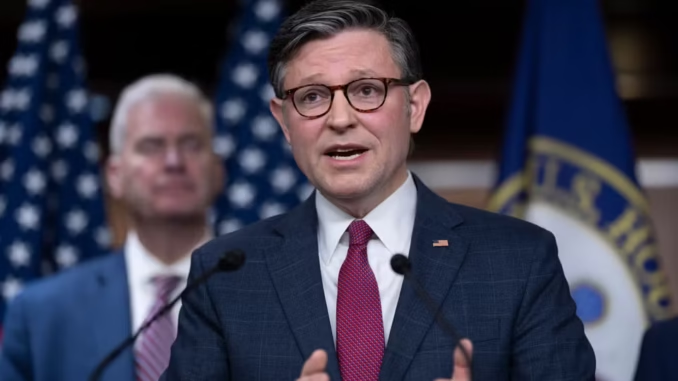
House Speaker Mike Johnson argued that the bill demonstrates America’s resolve. “President Trump and congressional Republicans are restoring American strength, defending our homeland, standing with our allies, and ensuring the United States remains the most capable military force in history,” he said before the vote.
Trump’s security strategy, released last week, accused Europe of overregulation, censorship, and a lack of confidence. It also warned of “civilizational decline” linked to immigration and suggested that European countries rely too heavily on US protection while avoiding responsibility for their own security. The document even showed support for far-right political parties across the continent.
Lawmakers Strengthen NATO’s Eastern Flank
Despite the White House’s rhetoric, Congress took the opposite approach. Lawmakers expanded funding for Baltic security and reinforced NATO’s northeastern front. Their actions represent one of the strongest congressional statements in years about Europe’s strategic importance.
The 2026 National Defense Authorization Act (NDAA), now moving to the Senate, includes $8 billion more than the amount the president requested in May. It also prevents the Pentagon from reducing US troop numbers in Europe below 76,000 for more than 45 days and blocks efforts to remove essential military equipment.
Push for Transparency in Drug-Interdiction Operations
Although the administration has hesitated over the bill’s pro-Europe direction, it still supports the 3,086-page text. The legislation contains a controversial requirement forcing the Department of Defense to release video footage of maritime operations targeting suspected drug-smuggling vessels in Latin America.
Lawmakers added this measure after repeated delays in obtaining the footage and growing concerns about the expanding use of lethal force in drug-interdiction missions. To ensure compliance, Congress will withhold 25% of Defense Secretary Pete Hegseth’s travel budget until the videos are delivered—an unusual and personal pressure tactic.
Continued Support for Ukraine
With administration support shifting, Congress reinforced aid for Ukraine by allocating $400 million in security assistance. This funding aims to maintain a minimum level of support even if additional emergency packages face delays.
A small group of conservative lawmakers considered blocking the bill, criticizing its Ukraine provisions and the absence of a ban on a central bank digital currency. However, such disagreements are common during final negotiations of the NDAA, and no serious threat emerged that could derail the legislation.
NEWS DESK
PRESS UPDATE